How to choose driftwood that fits your aquarium
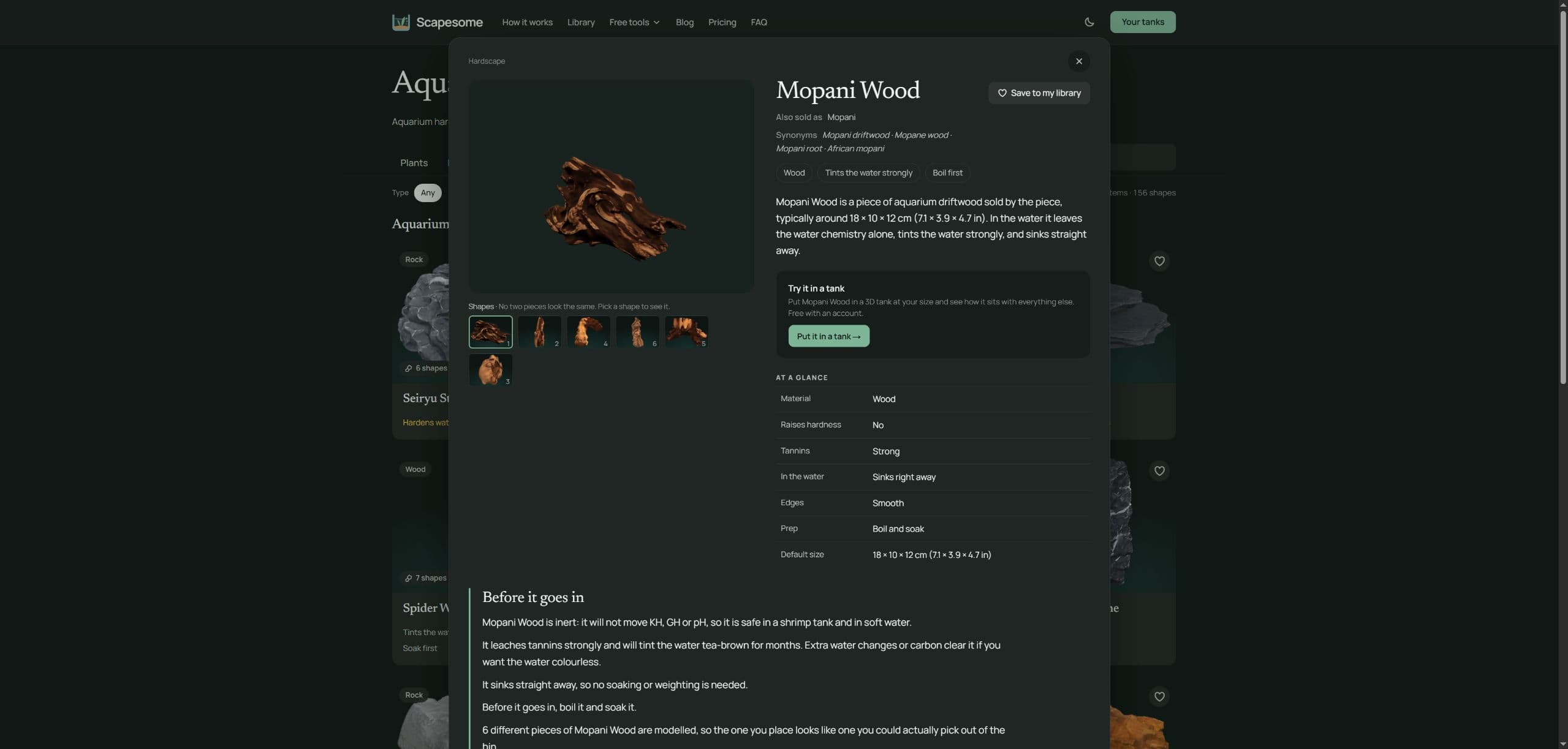
Mopani Wood’s shape options in Scapesome’s existing library. These planning models show different forms, not the exact piece a shop will deliver.
A piece can be shorter than the tank and still be too large for it. The problem is often the branch pointing toward the front glass, the bulky base taking up planting room, or the height once you turn it upright.
Before buying, compare the piece’s length, depth and height with the space inside your aquarium. Then check the position you actually want to use. Driftwood size makes sense only with an orientation attached to it.
Measure the piece you will receive
Ask whether the listing shows the exact piece or a representative example. “Medium” and “large” are shop categories, not dimensions you can transfer between sellers. A stated length also leaves two measurements unanswered.
For an exact piece, ask for its widest overall dimensions and photographs from more than one side. Include projecting roots and branch tips. A branch hidden behind the trunk in a front photograph may be the part that prevents your arrangement from fitting.
For an assorted piece, treat the photo as an indication of material and general character. Choose a seller’s size range with enough room for uncertainty; do not plan around a particular fork you may never receive.
Check driftwood size inside the glass
Use internal dimensions and the intended substrate surface. The height printed on the tank is not all available above a deep rear bed. A lid, rim and equipment can further limit where branches can go.
For example, imagine an internal footprint of 60 × 30 cm. In one orientation, a branchy piece occupies a 42 × 18 cm rectangle when viewed from above. The empty rectangular remainder is 1,044 cm², but it may be split into narrow pockets. That number alone cannot tell you whether a rooted plant, cleaning tool or fish can use the space.
Measure again after turning the piece. A different angle may reduce its left-to-right span while pushing a branch toward the front. Record the three dimensions in that position rather than carrying the original measurements into every view.
Check the gaps you intend to keep
There is no useful universal rule that driftwood should occupy a fixed percentage of a tank. A compact stump and an open branching piece can have the same outer dimensions while leaving very different routes through the scape.
Try these checks with the tools and materials you intend to use:
Can your algae scraper reach the glass beside each branch?
Can you plant behind the base without lifting it out?
Can you remove the intake or other equipment along its normal service path?
Are the planned swimming routes still open when surrounding plants fill out?
Use actual tool widths where you can. A gap that looks generous from the front may be inaccessible from above. These are working clearances for your setup, not a structural safety standard.
Separate visual fit from physical stability
Driftwood size does not establish whether a piece will sink, remain stable or be suitable for your water. Those require separate material checks. If buoyancy is the unresolved issue, use the driftwood preparation guide before fixing plants to it.
Keep heavy support and unstable arrangements out of guesswork. A digital model does not calculate the strength of a branch, adhesive joint or glass contact. Check the real piece and its support before filling the aquarium.
Use a model to test the footprint
The hardscape library shows wood types and available shapes. In the planner, you can turn and resize a chosen model to test the broad arrangement against your tank. Use the model’s outline as a planning aid; it does not become a scan of the particular piece in a retailer’s photograph.
Start with your measured dimensions, then compare front, side and top views. If the branch shape differs substantially, keep that uncertainty visible in your notes. A good-looking front view is only one check.
Your driftwood size decision should end with a short specification: exact piece or assortment, intended orientation, overall dimensions, substrate height underneath and the gaps you need to preserve. Take that to the shop. It is much more useful than asking for the largest piece that fits the tank’s length.
Related reading
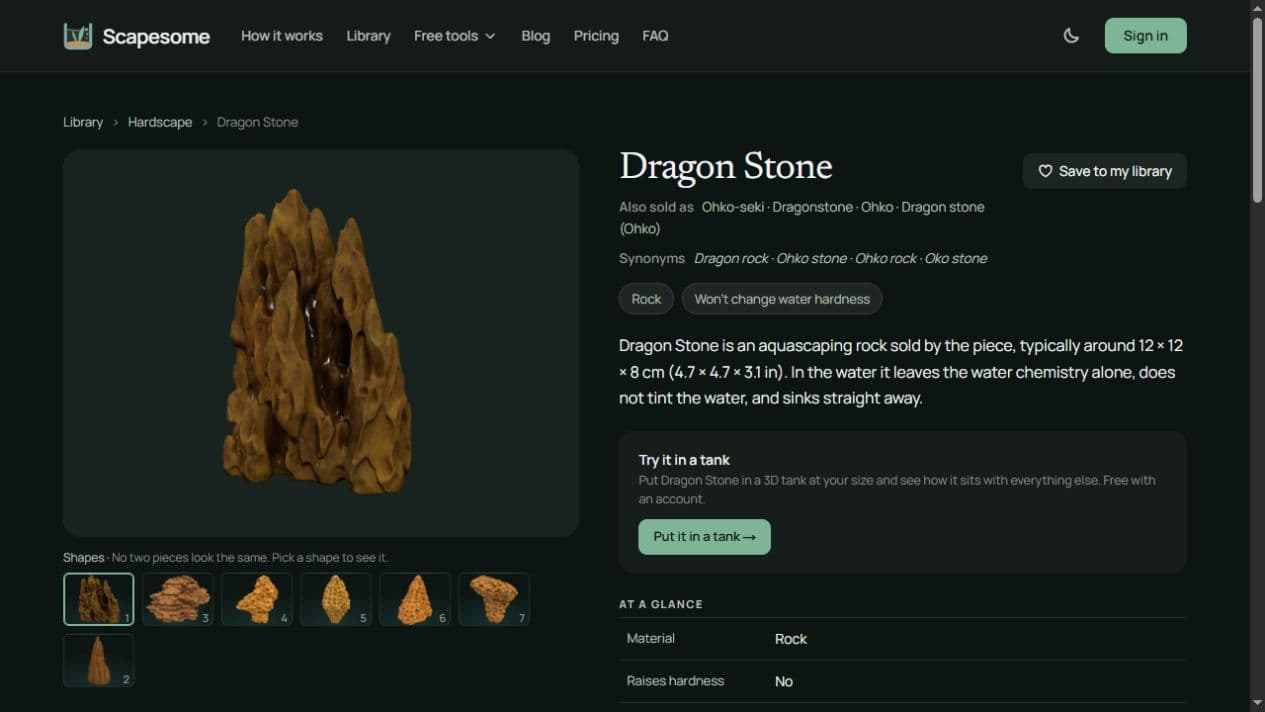
How to check aquarium hardscape before you glue it
Rehearse cleaning, planting and equipment removal before fixing the arrangement in place.
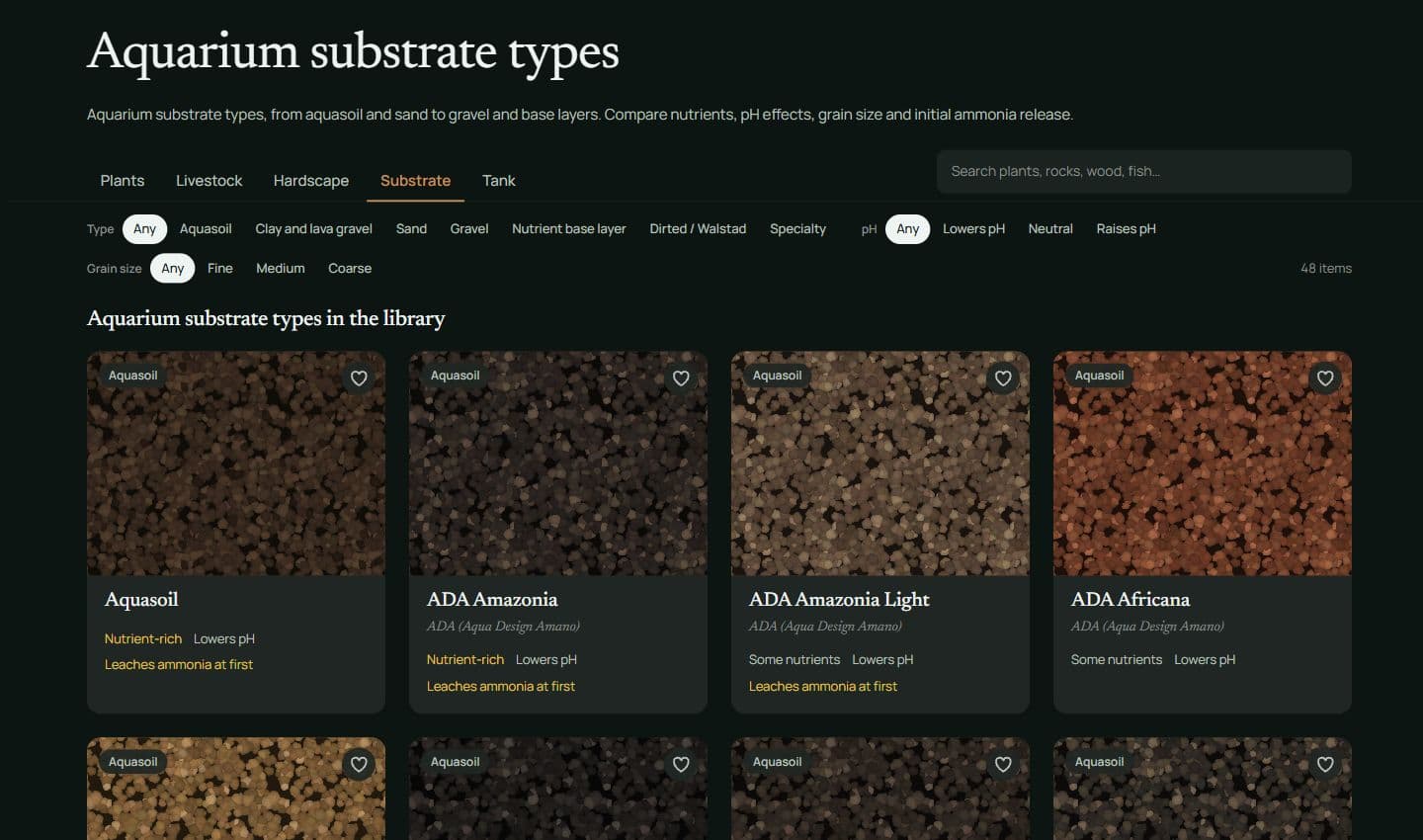
Aquasoil vs sand: which does your planted tank need?
Choose a bottom layer for the roots, water conditions and open areas in your plan. Learn when sand can work and what aquasoil needs you to check.
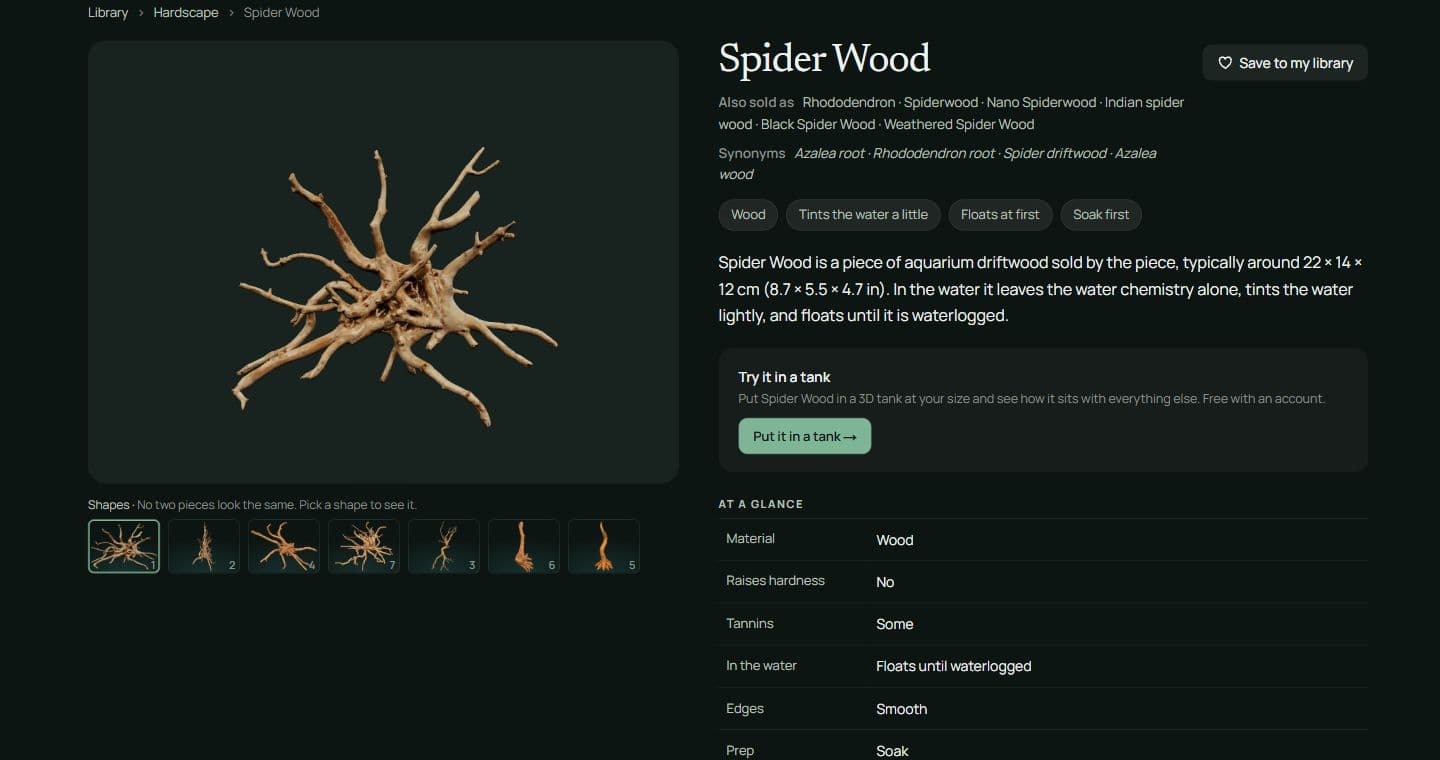
How to sink driftwood before planting your aquarium
Check whether your wood rises, tilts or rolls before planting. Choose between soaking and a suitable anchor, then test the whole arrangement underwater.