Aquasoil vs sand: which does your planted tank need?
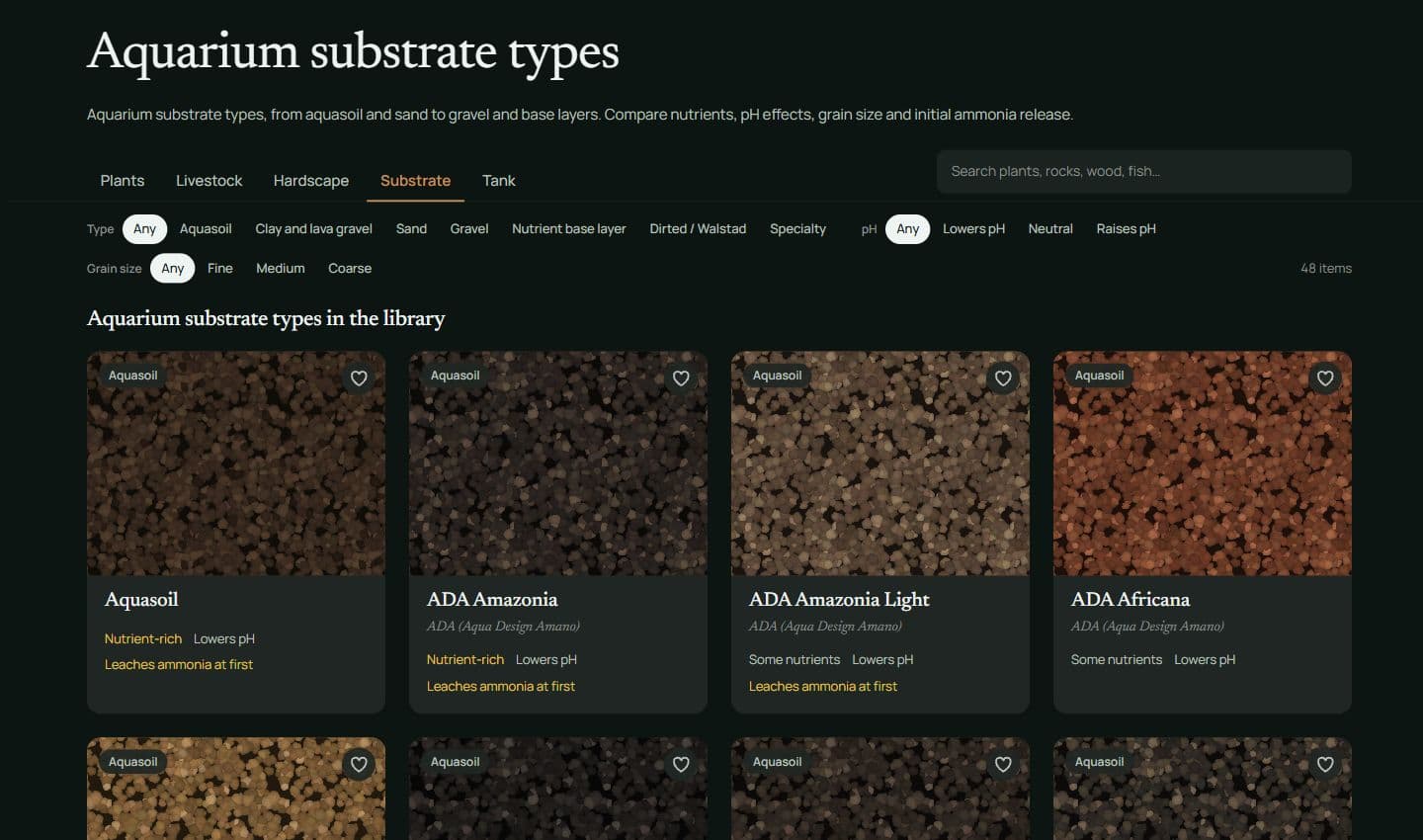
Scapesome's substrate library. These are rendered material previews and product notes; compare the instructions for the particular substrate you intend to buy.
A tank with healthy plants does not always have aquasoil across the whole floor. If most of the planting will sit on wood and rocks, the open sand at the front has a different job from the root zone behind them. Buying the same substrate for both areas can mean paying for a problem you do not have.
Aquasoil vs sand is a choice about planting, water conditions and the way you want to maintain the tank. Start by drawing where roots will actually enter the bottom layer. Then choose the material and feeding approach for those areas.
Where would aquasoil help?
Aquasoil is worth considering for a substantial area of rooted planting, especially when the specific product's nutrient and water effects fit the plan. Sand can also support a planted aquarium, but a plain, nutrient-poor material needs a separate approach to plant nutrition. Neither label tells you the whole growing setup.
An attached plant has a different relationship with the floor. If an Anubias or Java fern is fixed to hardscape with its rhizome exposed, the substrate beneath that hardscape is not its planting anchor. You still need to feed the plant appropriately; you simply do not need a soil bed to perform the fastening.
A wood-and-fern tank with open sand
Imagine a layout built around a branch with attached plants and an open front. The first decision is where the branch sits and which leaves will cover the background. The sand supplies the visible floor. Covering every open patch with aquasoil is not automatically an improvement for that arrangement.
If you later add one rooted plant, investigate its root feeding needs for that spot. Suitable root fertilizer can be part of an inert-substrate plan when used according to its directions. One change in a corner does not necessarily mean replacing the whole floor.
A layout with a large rooted planting area
For a broad planting bed, compare a suitable aquasoil with a sand-based approach that includes the necessary nutrition. Look at the actual plants, how you will establish them and what the material's instructions require. A cheap bag is not the whole cost if the planting plan needs additional supplies or a different maintenance routine.
Keep the water requirements in the comparison. Some aquasoils lower pH or otherwise change water chemistry. That effect can be useful in one setup and something to avoid in another. Do not buy it as a universal upgrade before checking the intended livestock and your starting water.
Read the bag as a specific product
Aquasoil, nutrient base layer and decorative sand are not interchangeable names. A concentrated base layer should not be treated as a complete, exposed aquasoil bed just because both products are sold for plants.
For example, Tropica Aquarium Soil is specified as a complete bottom layer, while its Plant Growth Substrate is a different product. Start-up and covering instructions belong to the product you buy. Do not transfer a sandwich of layers from someone else's tank without knowing what each layer actually is.
The same care applies to sand. Choose a material intended for the aquarium and check its composition and grain characteristics. A pale decorative product and a verified inert sand may look similar in a photograph without having the same effects or behavior.
Before ordering, find answers to these questions:
Is this a complete bottom layer, a concentrate that needs covering, or a decorative material?
What nutrients does it provide, and what additional feeding does the planting plan require?
Does it change water chemistry, and is that compatible with the intended livestock?
What preparation and start-up routine does the manufacturer specify?
Use the substrate library to compare the candidates, then verify the current instructions for the exact bag. A general category can help you shortlist; it cannot replace product-specific directions.
Draw the boundary before calculating bags
If you want a sand foreground and a planted bed behind it, put that division on the plan before working out quantities. Check what happens at the edge: can you reach it for maintenance, will planting disturb the border, and are you happy to see a few stray grains against the contrasting material?
Treat a very crisp boundary in a reference image as an appearance to maintain, rather than a permanent property of two different bags. If keeping the edge neat sounds like a nuisance, simplify the division or reconsider whether the contrast matters to you. That is a useful design decision to make before filling the tank.
Once the material and planting areas are settled, choose the depth for each job. The substrate depth guide covers that decision without making every material use the same bed. The volume and substrate calculator can then help turn the dimensions and depth assumptions into an estimate of how much to buy.
You may finish with aquasoil across a rooted bed, an inert floor with targeted nutrition, or separate planted and open zones. The choice is good when you can explain what each part is doing and how you will look after it. A bag described as premium cannot make that decision for you.
Related reading
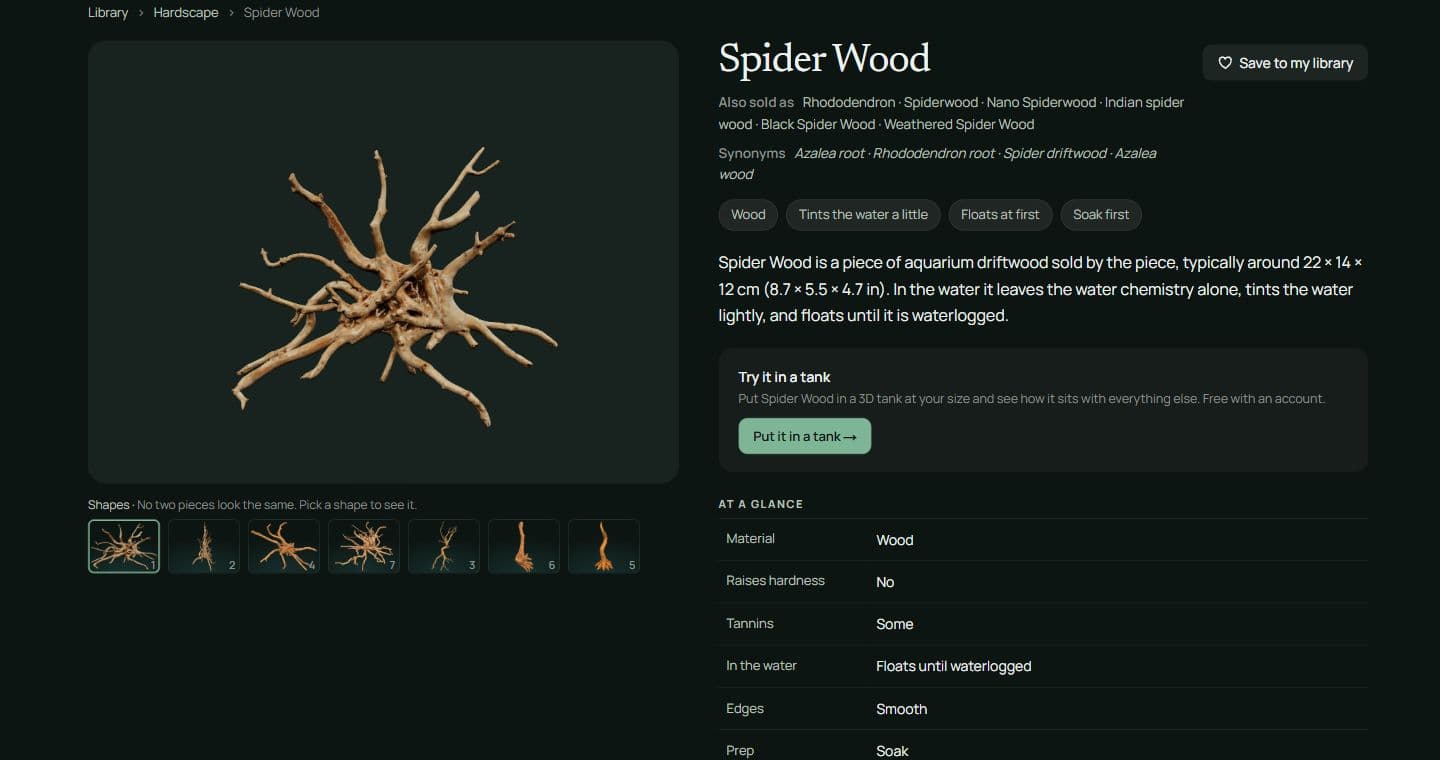
How to sink driftwood before planting your aquarium
Check whether your wood rises, tilts or rolls before planting. Choose between soaking and a suitable anchor, then test the whole arrangement underwater.
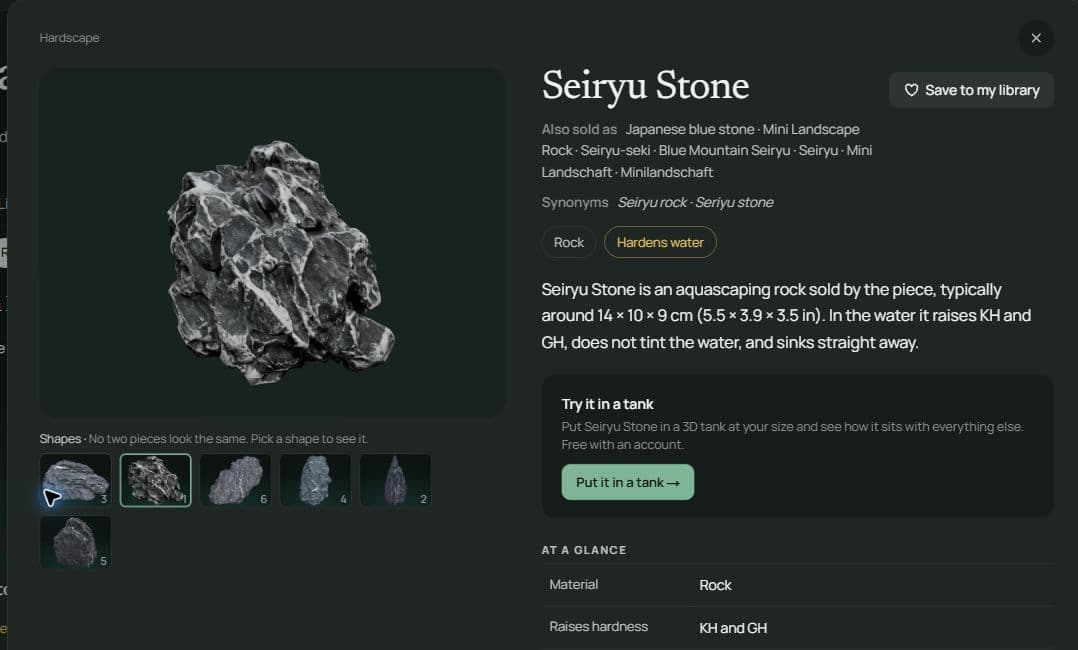
Seiryu stone vs dragon stone: which should you buy?
Choose rocks for your water conditions and the shapes your tank needs. Compare Seiryu and dragon stone before ordering the hardscape.
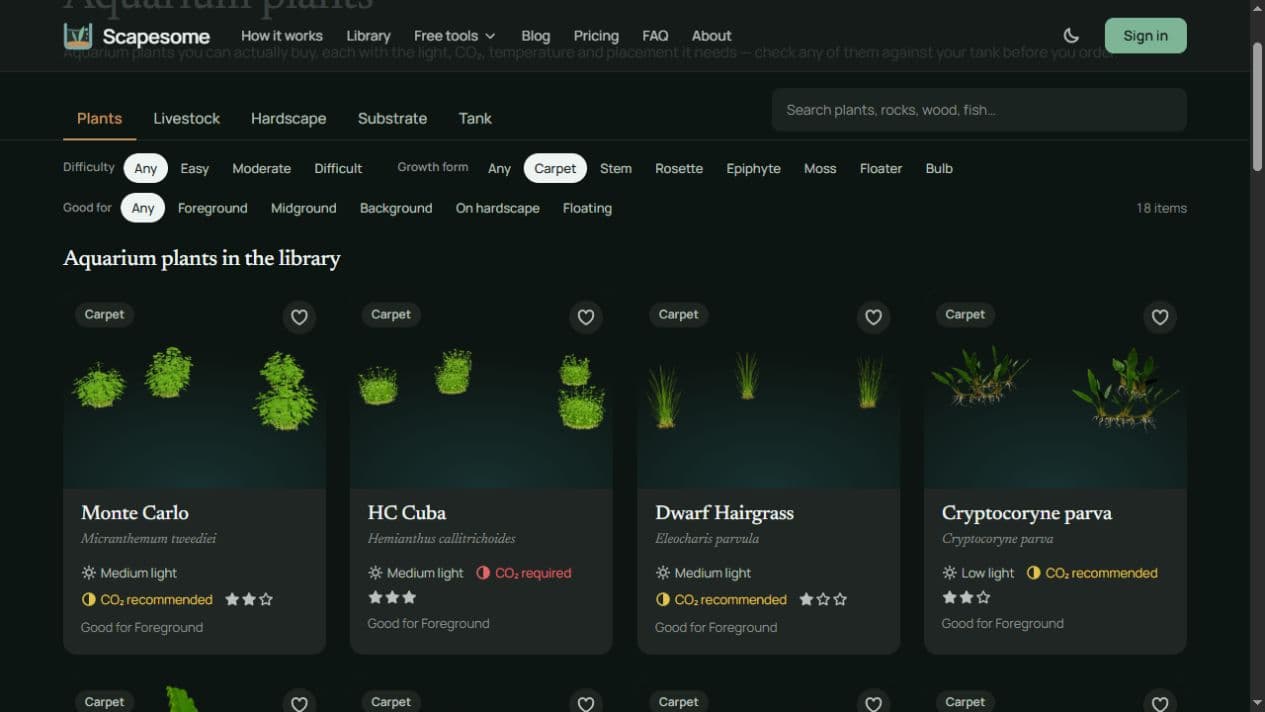
Carpet plants without CO2: which ones suit your tank?
Choose a foreground for a tank without CO2 injection: compare leaf shape, light, height and waiting time before you buy plants.