How long should aquarium lights stay on for plants?
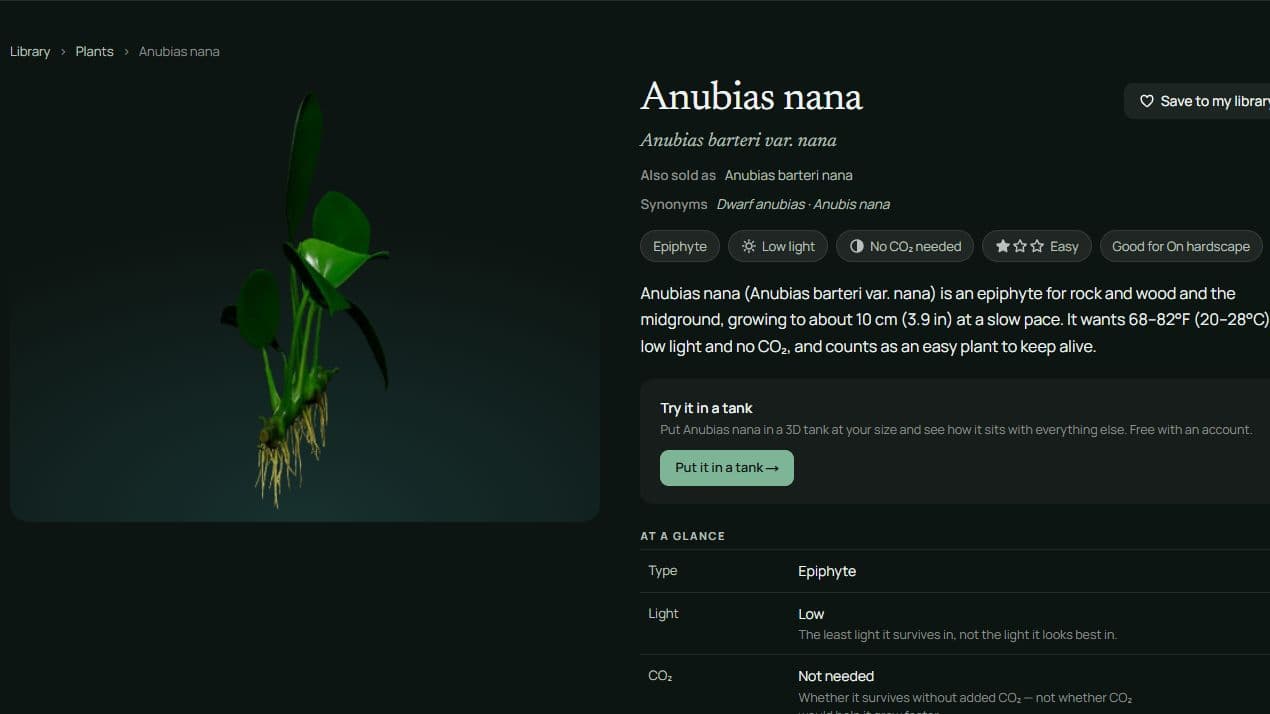
Anubias nana’s current Scapesome entry illustrates species-level light guidance. It is not a PAR measurement, a timer setting or a growth experiment.
For a newly planted freshwater aquarium, setting aquarium lights for six hours a day is a reasonable conservative starting point. Put it on a timer, keep the setting consistent and watch how the plants establish. Around six to eight hours is often a useful working range for a straightforward planted tank; it is not a target every aquarium must reach.
The other half of the question is brightness. Six hours under a very strong light is not equivalent to six hours under a weak one. Extending the day cannot reliably make up for a lamp that fails to light the plants you chose.
Set a schedule for your aquarium lights
Pick a viewing window that suits your day. For example, 3 pm to 9 pm gives six hours of aquarium light and an evening to enjoy the tank. This is an example of timer arithmetic, not a special biological advantage of those clock times.
Check the timer after setting it. Watch an actual on and off cycle, particularly after a power cut or an app update. If a light has sunrise, sunset or automatic modes, find out what they really do. A display marked “24/7” does not tell you how many hours the plants receive substantial light.
Switch aquarium lights off at night. A decorative blue setting is still light; it need not run all night to make the tank look occupied. Fish also need an appropriate daily light and dark cycle.
Count the light that reaches each plant
A plant at the surface and another at the bottom do not experience the same conditions. Tank depth, the lamp's spread, a dirty cover, tall leaves and floating plants all affect what reaches the lower planting.
Before adding hours, look at the struggling plant's actual position. Is it beneath a large sword leaf? Has a floater patch drifted above it? Is it at the edge of the lamp's coverage? Clearing an unintended shadow or choosing a better-suited plant may be more useful than lengthening the day for everything.
The light guidance in the plant library is a starting point for species choice. It does not measure the light in your tank. If you have access to a suitable PAR meter, measurements at plant level can help compare positions; a photograph or a lamp's wattage alone does not supply that measurement.
When should you add more time?
Do not add an hour each week simply because a calendar says to. Once the planting is established, review healthy new growth, unwanted algae, shading and the requirements of the species. If you have a reason to adjust the schedule, make a modest change and leave the other settings steady while you observe it.
Write down the duration, brightness setting and date. Take a photo from the same position. That is enough to make a later comparison more useful than remembering that the tank looked “a bit better.” Different plants respond at different speeds, so an overnight comparison is rarely informative.
Professional growing guides use different ranges for different setups. The useful shared advice is a consistent timer and adjustment to the aquarium's response. An established tank running well does not need a new schedule solely to match a number in this article.
If algae appears, check more than the timer
Excessive lighting can contribute to algae trouble, but algae is not proof of one particular mistake. Review feeding, maintenance, nutrient supply, plant health and any recent changes alongside light intensity and duration.
If you changed the lamp, fertilizer and schedule at once, you have made the cause harder to identify. Return to a documented, manageable routine and change one relevant factor at a time. Do not treat a longer day as the automatic cure for pale or stalled plants.
Check overhead growth too. Our floating-plant coverage guide explains how an expanding surface patch changes the space beneath it. That can happen even when the timer has stayed exactly the same.
What if the room gets daylight?
Include strong ambient light in your assessment. A tank beside a sunny window has a different exposure from one in a dim room, even when both lamps run for six hours. Avoid direct sun and check for reflections or seasonal changes before blaming the timer alone.
Give aquarium lights a schedule you can repeat. Keep nights dark, select plants for the available conditions, and adjust because you have observed a reason. The timer should make the aquarium easier to understand.
Related reading
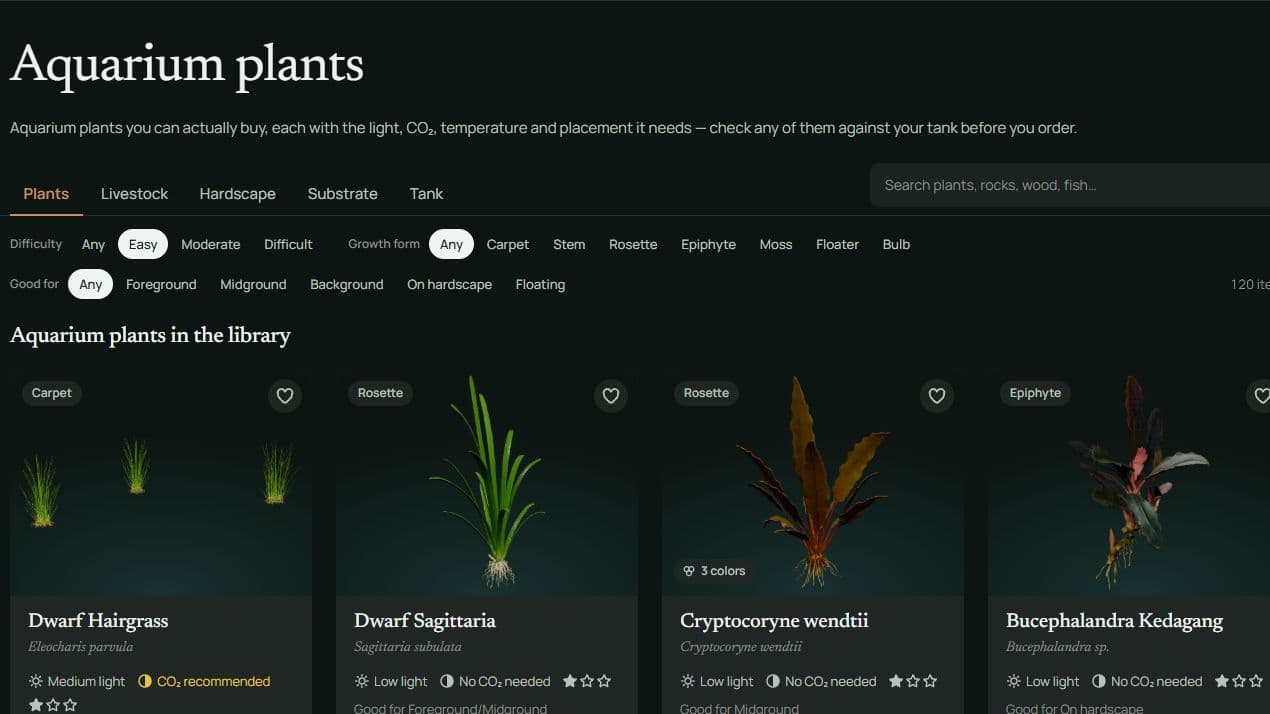
Best aquarium plants for beginners: pick by your setup
A short, practical plant shortlist for the positions and conditions in your first planted aquarium.
Best plants for betta fish: choose cover that fits
Choose plants by the jobs they do for a betta: resting places, cover and a clear route to the surface.
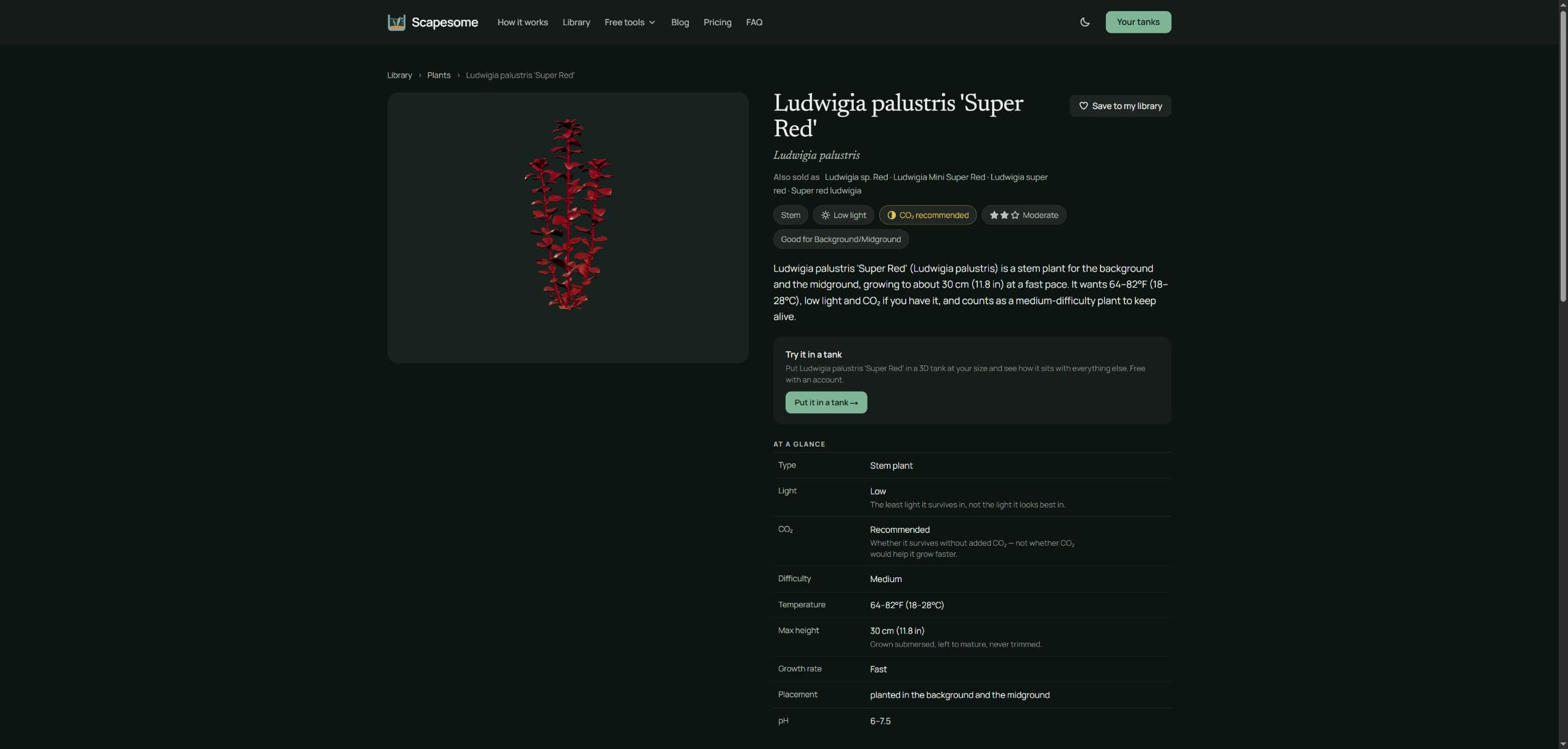
Red aquarium plants without CO2: what is realistic?
Set realistic expectations for a red or bronze accent without assuming your leaves will match a promotional photograph.