Best plants for betta fish: choose cover that fits
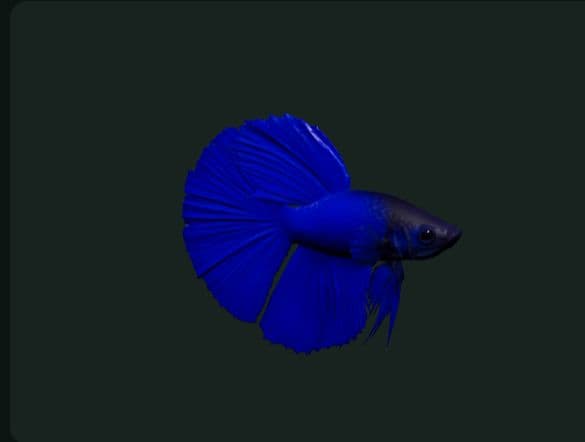
The existing Betta appearance asset in Scapesome. It is a planning illustration; the article focuses on the space and planting the fish needs.
A small Anubias on a low rock and the same plant mounted near the surface do different jobs. One fills a corner. The other may offer a resting place close to air. That is a more useful starting point for a betta tank than buying every plant on a top-ten list.
Choose plants for three things: somewhere to rest, somewhere to retreat, and a route through the tank. Then check whether those plants will grow under your light. A densely planted photograph can hide a surprisingly awkward swimming space.
A short list, with a job for each plant
These are useful candidates for a freshwater betta aquarium, rather than a ranking of plants every betta will prefer.
Plant | Where it helps | What to check first |
|---|---|---|
Anubias nana | Broad leaves on a piece of wood or rock | The height of the mounting point; keep the rhizome exposed |
Java fern | Taller cover around the back or a side | The mature size of the named variety; attach rather than bury the rhizome |
Cryptocoryne wendtii | A rooted clump below and beside a retreat | Room for the rosette and a suitable source of nutrients |
Salvinia minima | A patch of overhead cover | Local availability, surface movement and regular thinning |
Start with the role you are missing. If the tank already has a leafy back corner, another tall plant may add less than a well-positioned broad leaf. If the surface is already crowded, skip the floater.
The ordinary nana form and Petite are not interchangeable in size. Compare Anubias nana and Petite before buying the smallest plant merely because the aquarium is small. A tiny leaf may not do the job you pictured.
Leave an easy way to reach the surface
Bettas breathe air at the surface as well as using their gills. Keep that access open, with an air gap below a secure lid. Plants can provide shelter and resting places; they should not turn the whole top into a closed mat.
Look from the side as well as from above. Can the fish move from its retreat to open water without pushing through a wall of roots? Does the chosen resting leaf sit beneath a clear patch? Can food reach a place where you can see whether it is eaten?
There is no universal percentage of surface coverage that answers all three questions. A patch above one side can be useful while another area stays open. Our surface-cover guide explains how to judge the arrangement as plants spread.
Keep the filter operating and check where its outlet sends the plants. A floater that repeatedly collects at the intake, or a resting leaf constantly buffeted by the return, needs a different position. Adjust the arrangement around appropriate filtration rather than switching filtration off for a tidier picture.
Plant the base correctly
Anubias and Java fern have a horizontal rhizome, the thick part from which leaves and roots emerge. Fasten the plant to suitable hardscape while leaving that part exposed. Roots can reach down into the bed; burying the whole plant like a rooted stem is the mistake to avoid.
A crypt belongs in the substrate. Cover its roots while keeping the growing crown at the surface. Leave space around it so the eventual clump does not close your swimming route.
Before installing the piece, run a careful check over the real rock or wood for sharp points and tight traps. Long fins can catch on rough decorations. A smooth-looking model cannot establish whether the piece in your hand is safe.
Build a useful first arrangement
For a simple starting plan, try one sheltered side, one accessible resting position and a visible feeding area. These are layout jobs, not a prescription for how many pots to buy. Your tank dimensions and the plants supplied decide the quantities.
Check the named plant's light and temperature needs against the conditions you maintain for the fish. Low-light plants still need light and nutrients. Live planting also does not replace a suitable tank, heater, filtration or a properly established biological filter.
You can compare the candidates in the plant library, then place your choices by hand in Scapesome to inspect their positions. Watch your actual betta after planting: where it rests, whether routes stay clear, and whether it can reach the surface comfortably matter more than matching the original plan.
Related reading

Red aquarium plants without CO2: what is realistic?
Set realistic expectations for a red or bronze accent without assuming your leaves will match a promotional photograph.
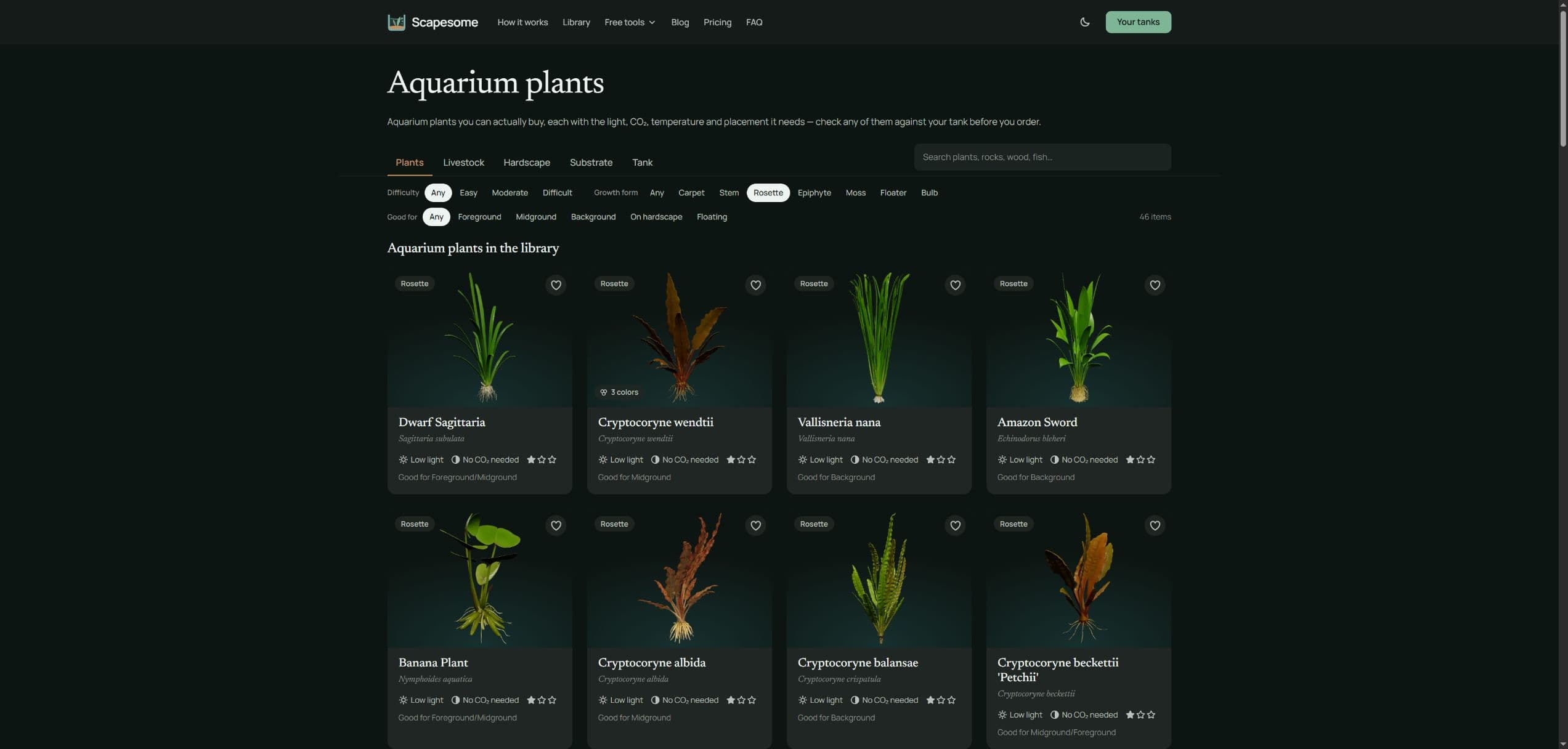
How many aquarium plants should you buy?
Count planting jobs first, then convert them into pots, cups or bunches using the material the seller actually supplies.
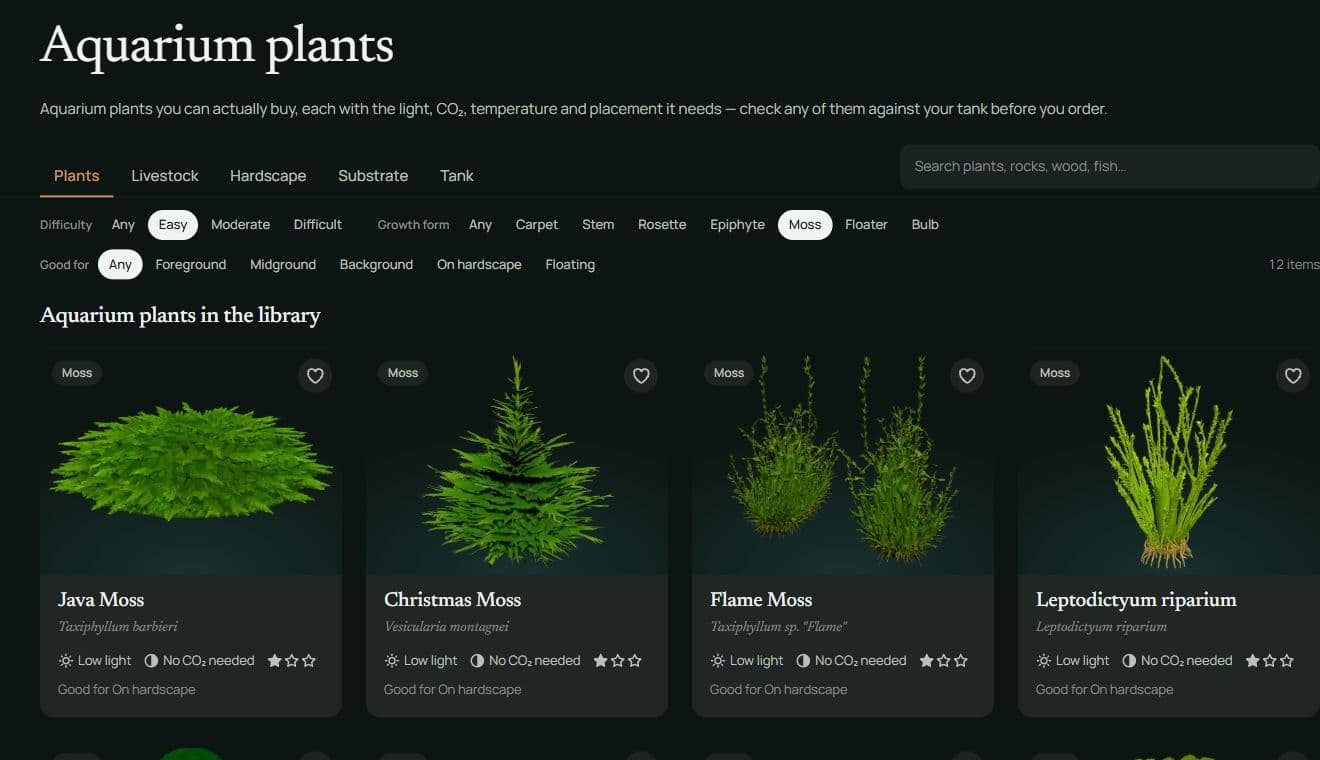
How to attach aquarium moss to wood or rock
A practical way to position, fasten and inspect a small moss patch while leaving room for later trimming.