Red aquarium plants without CO2: what is realistic?

The current Super Red plant entry in Scapesome. Its illustration is a visual reference, not a guaranteed leaf color in your tank.
You can plan a colored accent without turning the whole aquarium into a high-demand setup. The important distinction is between keeping a plant alive, getting healthy new growth and reproducing the saturated color in a particular photograph.
Red aquarium plants vary considerably. Choose a named species or cultivar for the conditions you intend to maintain, and allow for a different shade or growth habit. A shop photograph is a useful reference for identity, not a color guarantee for your aquarium.
Start with the conditions you will keep
Write down whether you plan to inject CO₂, what light reaches the intended position and how much trimming you want to do. “No CO₂ injection” does not mean there is no carbon dioxide in the water. It means the plants rely on what the system supplies without that additional controlled source.
A bright lamp cannot replace missing carbon or nutrients. Raising light simply to chase a stronger red may create a maintenance problem without delivering the look you wanted. Choose a plant for the setup, rather than committing the whole tank to the needs of a single colored stem.
Also consider shade. A plant receiving direct light at the back of an open aquarium faces different conditions once floating plants or a branch cover the surface above it. Evaluate the actual position, not just the light’s product name.
Compare named candidates, not a red-plants bundle
Ludwigia palustris ‘Super Red’ is a reasonable candidate to investigate when you want a colored stem without automatically choosing a demanding specialist. Check the producer’s current profile and the conditions attached to its color description. It does not establish that every Ludwigia, or every plant sold as “red,” will perform the same way.
Open the Super Red entry alongside other options in the plant library. The current Scapesome entry distinguishes its light and CO₂ guidance. Treat “recommended” as a reason to understand the tradeoff, not as the same label as “required” or a promise that omitting injection has no effect.
Names matter here. A brown Cryptocoryne, an orange-tinged stem and a strongly red cultivar create different accents. If a warmer brown or bronze would satisfy the composition, include it in the comparison rather than rejecting it because the label lacks the word red.
Give the color a small, deliberate job
A single group can separate two green textures or draw attention near a main rock. It does not need to form a red wall across the back. Decide where the accent belongs before deciding how many pots to buy.
Try a front-view check: can you still see the hardscape outline, and does the colored group have enough space to stand out? Then look from above. A narrow red patch in the front view may require more floor depth than you expected.
The layout planning guide is useful for placing that focal group. Reserve room for the plant’s eventual spread and for reaching its stems. Color should help the arrangement read clearly, rather than hide a maintenance bottleneck.
Judge the new growth you actually get
After planting, compare new growth under a consistent light and viewing angle. Aquarium lighting, camera exposure and image editing can make two photos of the same plant look very different. A model or a generated preview is also not evidence that your real leaves will reach that color.
Look at the condition of the new leaves and stems as well as their hue. If growth is poor, review the whole growing environment before adding iron or changing several fertilizer products. Extra iron is not a universal red-color switch, and a photograph cannot establish a nutrient deficiency.
Allow the plant to adapt, keep a record of changes and adjust one clear issue at a time. Avoid using a fixed number of days as a promise that every newly planted specimen should have colored up.
Buy for a range of acceptable outcomes
Before ordering red aquarium plants, decide which results you would still enjoy: a slower stem, a softer shade, a smaller colored group or a different cultivar. If only a dense, saturated display would satisfy you, investigate the growing conditions that produced that display before buying.
A modest accent chosen for your existing setup is a clear plan. A purchase that depends on every leaf matching a promotional photograph leaves much more to chance.
Related reading
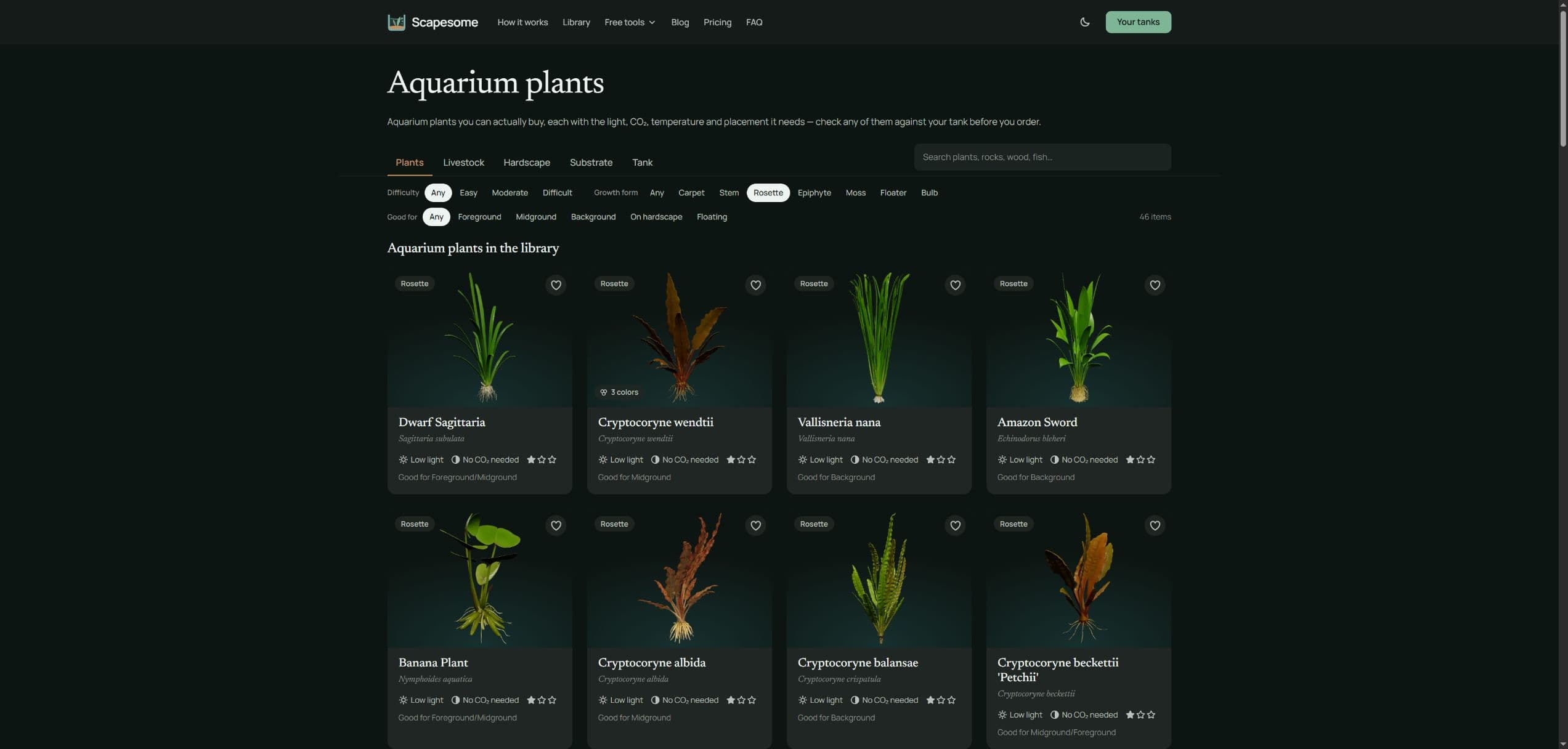
How many aquarium plants should you buy?
Count planting jobs first, then convert them into pots, cups or bunches using the material the seller actually supplies.
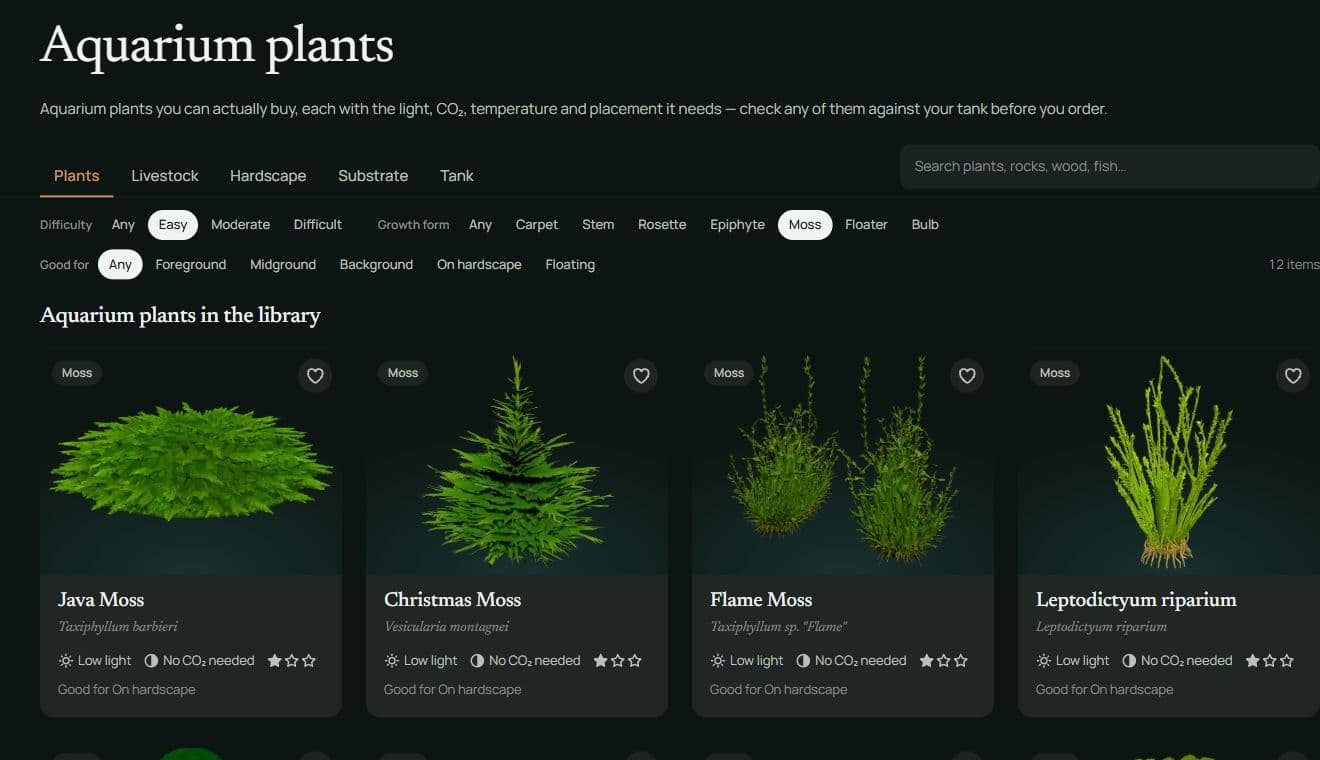
How to attach aquarium moss to wood or rock
A practical way to position, fasten and inspect a small moss patch while leaving room for later trimming.
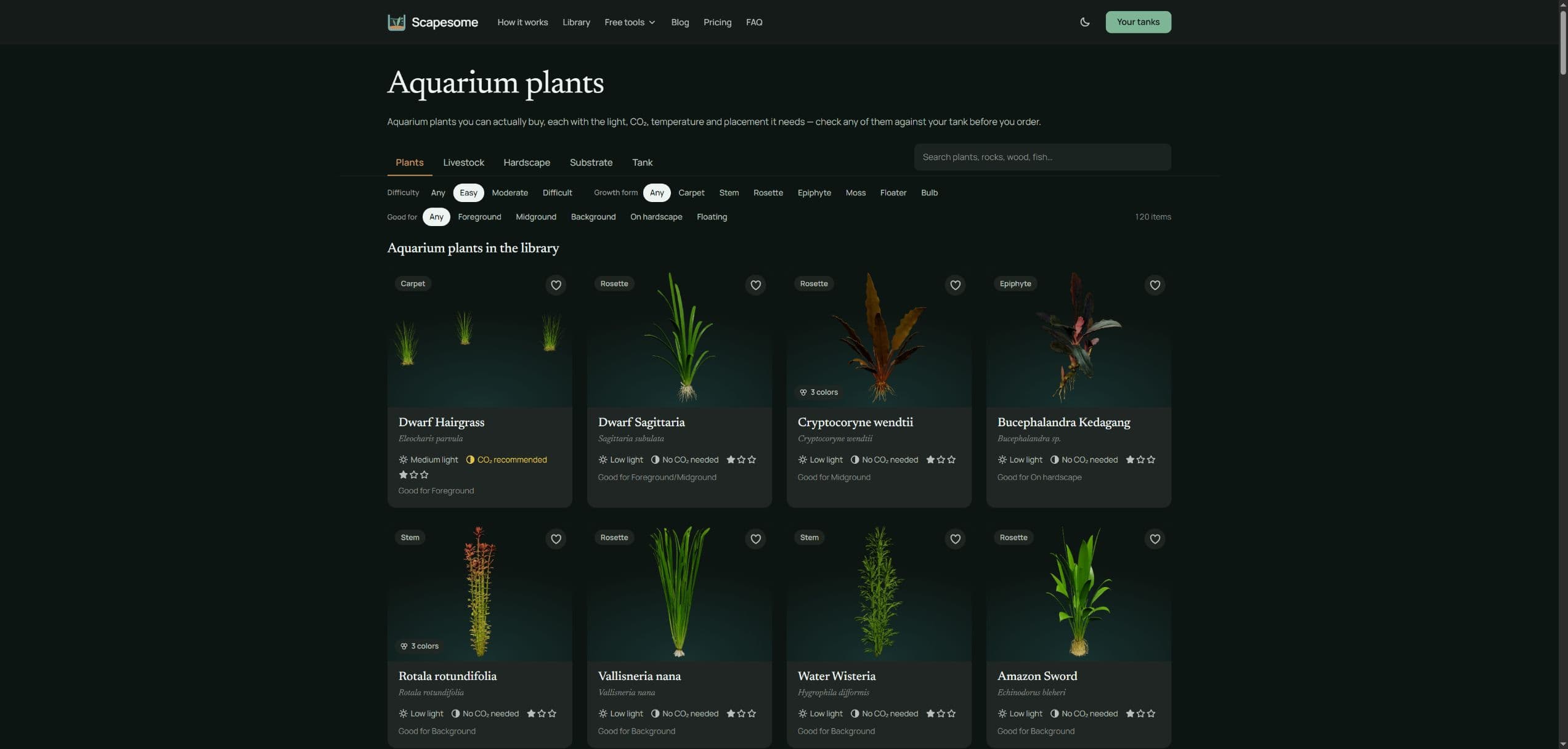
Tissue culture vs potted aquarium plants: which should you buy?
Choose cups or pots by the actual plant material, planting positions and preparation involved, rather than comparing container counts.