How many aquarium plants should you buy?
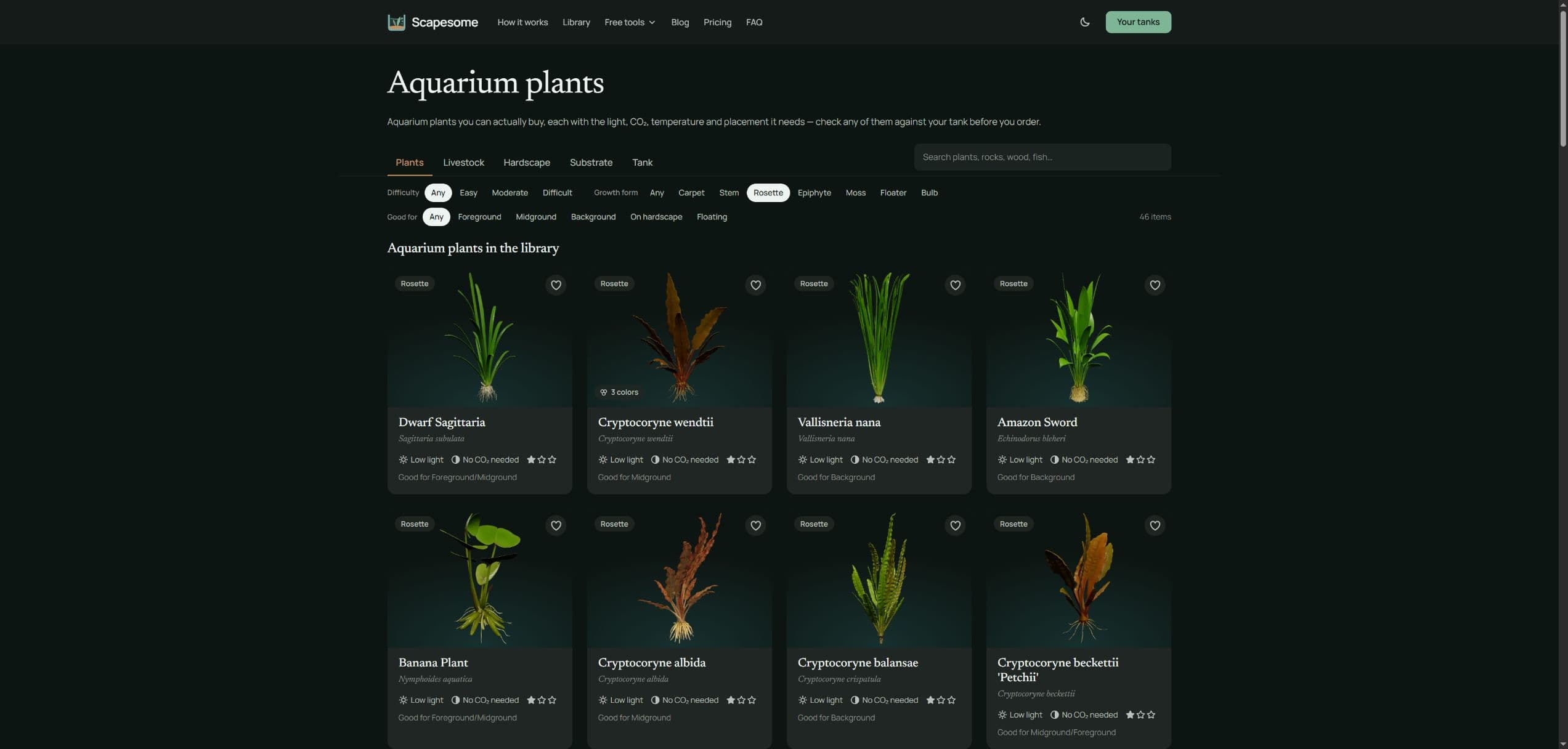
Rosette entries in Scapesome’s plant library. A species illustration does not specify the number of usable plants in a retail package.
Count the places you want to plant before counting pots. Tank volume tells you very little about a shopping list: two aquariums with the same capacity can have a bare sand path, a large wood structure or nearly the whole floor available for roots.
To work out how many aquarium plants to buy, separate three things: the area or positions you want to fill, the size of the starting portions, and what each package actually contains. Keep the expected grown-in shape separate from what you will receive on planting day.
Make a list of planting jobs
Draw the footprint and mark the places already occupied by rock, wood and equipment. Leave the areas you intend to keep open. Then describe each remaining job in ordinary terms: a background group, three rosettes beside a stone, two small plants on a branch, or a patch intended to spread.
Use different units for different jobs. A specimen plant has a position. A group of stems has planting points. A spreading foreground has an area and an initial arrangement. A moss patch has a surface to cover. Adding all of these together as “plants” hides the information you need at the shop.
The plant library helps distinguish these growth forms and placements. Its mature-size information is useful for reserving space, but it does not specify the size or yield of a retailer’s package.
Convert the plan using the seller’s actual portions
Here is a purchasing example, not a recommended planting density. Imagine you have already chosen eighteen stem planting points, three separate rosette positions and two small plants to attach to wood.
Job in the plan | Assumed usable material per package | Packages for this example |
|---|---|---|
18 stem planting points | 6 usable stems | 3 |
3 rosette positions | 1 suitable rooted rosette | 3 |
2 attachment positions | 2 suitable small plants | 1 |
The example totals seven packages because of those stated assumptions. It is not “seven plants for this tank.” If the seller confirms a different number of usable stems or divisions, recalculate that row. Do not split an unsuitable specimen merely to make the table work.
If you are asking how many aquarium plants will fill a carpeted area, first choose the starting portions and spacing appropriate to the species and your conditions. Then count positions in that area. An imaginary grid cannot guarantee what a cup contains or how quickly its contents will spread.
Decide how much waiting you are buying
Starting with fewer portions can reduce the initial purchase, but it also means more open space while they establish and grow. Starting with more can give a fuller arrangement sooner, while increasing preparation time, cost and the risk of planting so tightly that sections are hard to reach.
Neither choice guarantees an algae-free start. Light, nutrients, CO₂, plant condition and maintenance still matter. Do not turn an arbitrary floor-coverage percentage into a promise of biological stability.
For a budget plan, identify which parts need to look substantial immediately. You might prioritize one established focal plant and accept a slower start elsewhere. Keep that decision explicit rather than buying one of everything and finding that no group is large enough to read clearly.
Check the plan against mature space
Before adding another pot, look at what is already planned beside it. A small rosette may eventually occupy the space between two rocks. A stem group needs access for trimming and replanting. A branch covered in plants may shade the floor below.
Use the stem spacing guide for the placement decision, then return to the package conversion. Spacing and purchasing are connected, but changing the number of packages does not settle whether the arrangement has room to grow.
A planning model can help you compare the shape and placement of your chosen plants. Treat the model as a visual planning aid, not an inventory counter that knows a seller’s current pot contents.
Take a useful shopping list with you
For each item, record the exact plant name, growing requirements, planting job, desired starting portions and seller-confirmed package yield. Add the preparation it needs. Cups, rooted pots, loose moss and stem bunches require different handling.
That list answers how many aquarium plants you need more honestly than a formula based on gallons. You can change the budget, substitute a package format or leave one area for later, and still see exactly which part of the scape the decision affects.
Related reading
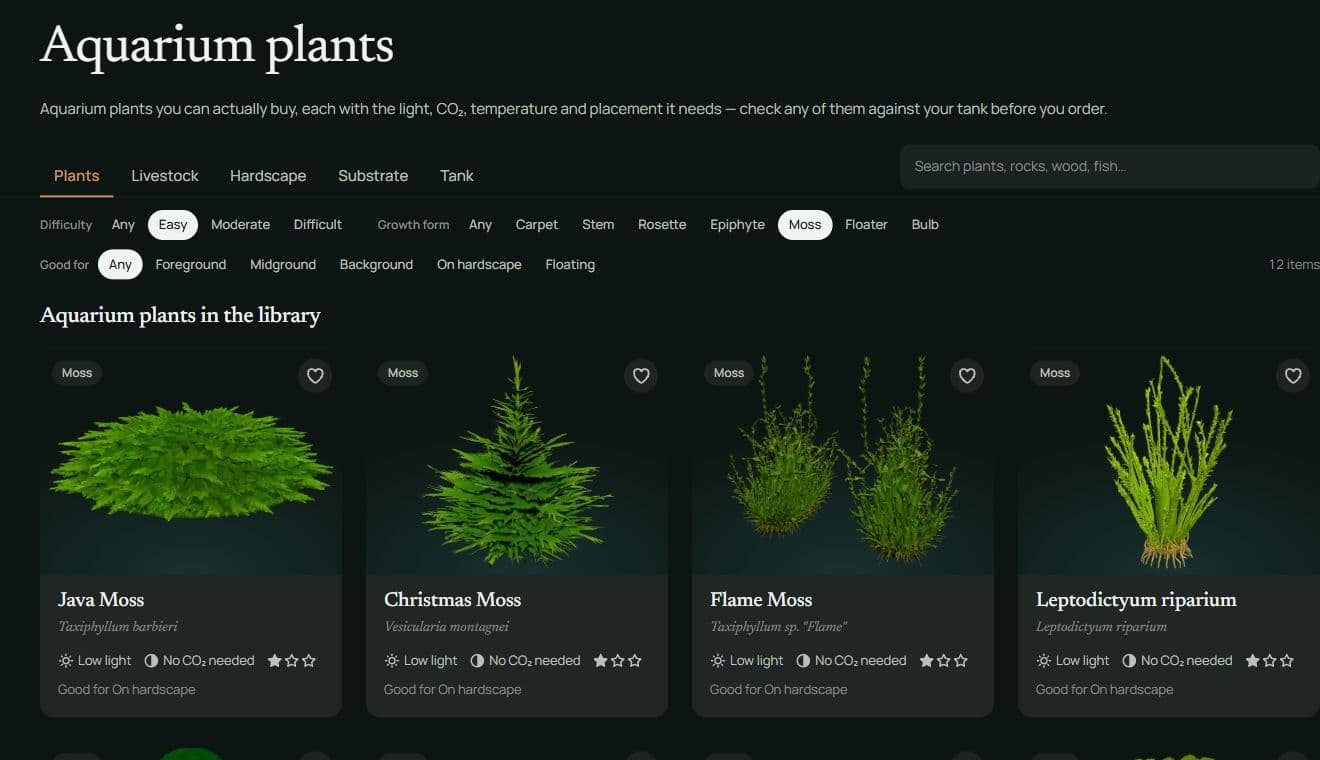
How to attach aquarium moss to wood or rock
A practical way to position, fasten and inspect a small moss patch while leaving room for later trimming.
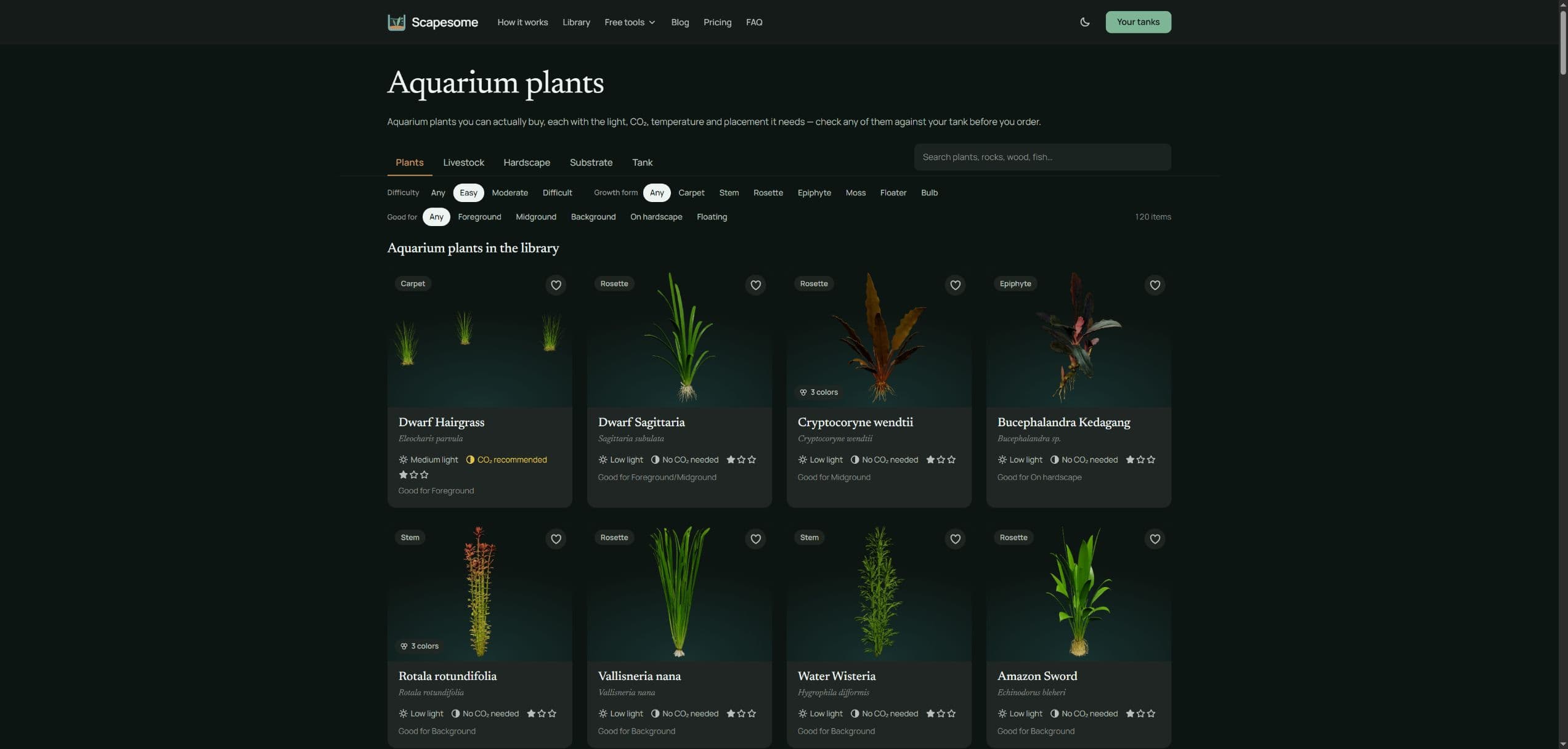
Tissue culture vs potted aquarium plants: which should you buy?
Choose cups or pots by the actual plant material, planting positions and preparation involved, rather than comparing container counts.
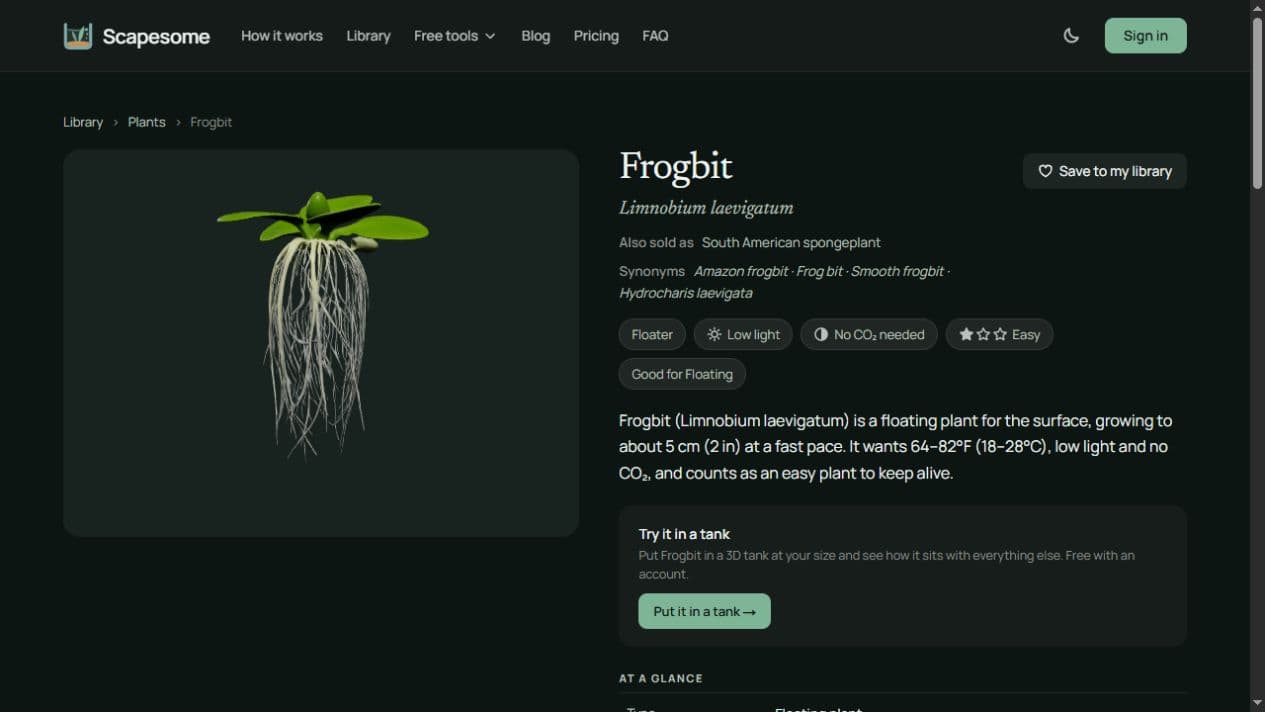
Floating aquarium plants: how much surface should you cover?
Decide where shade belongs and keep the required surface areas open before adding a patch of floating plants.