How to attach aquarium moss to wood or rock
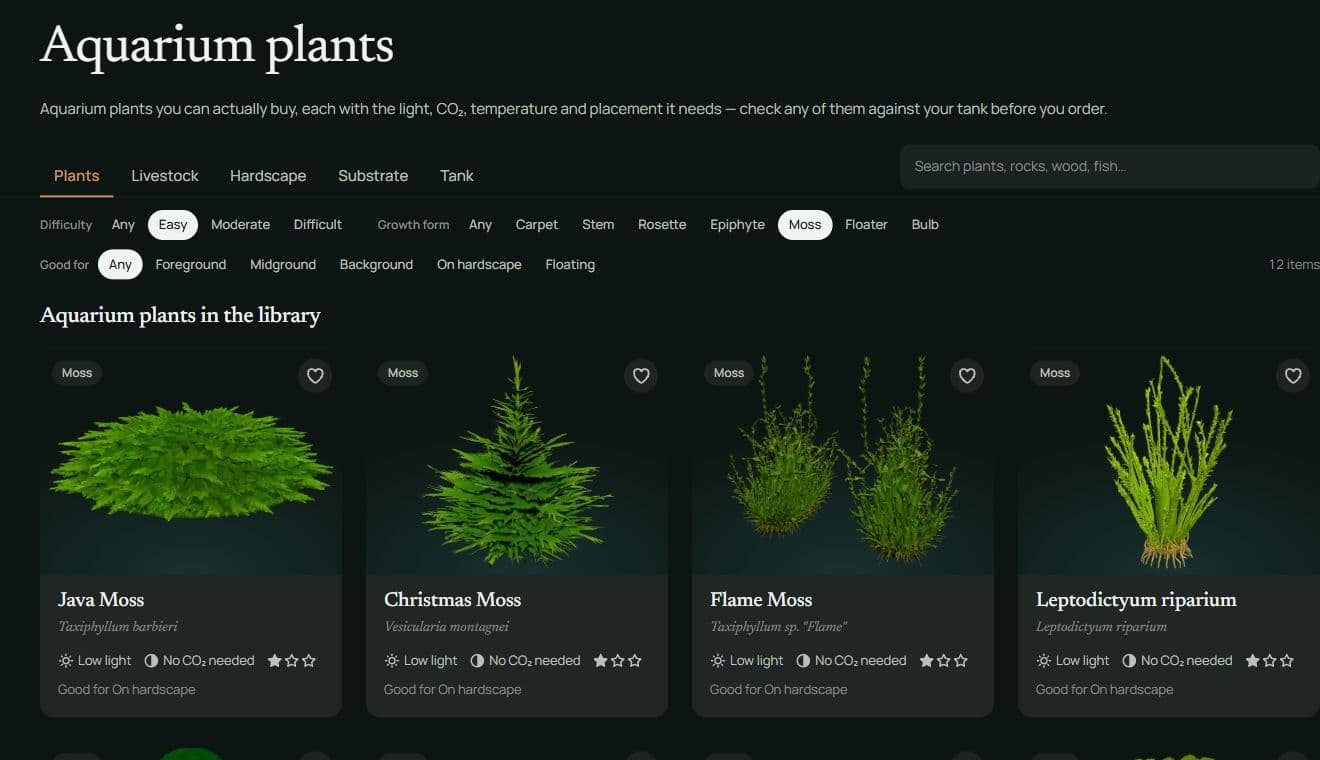
Moss entries in Scapesome’s plant library. The illustrations compare plant forms; this is not a photograph of an attachment technique.
A thick green bundle is easy to fasten and awkward to keep tidy. The outside catches the eye, while the material underneath is shaded and difficult to inspect. Begin with a thin, spread-out layer on a surface you can reach again.
Aquarium moss needs suitable growing conditions as well as a fastening. Choose the species, decide where you want it to grow, and use a method appropriate to that plant and surface. Glue cannot compensate for a shaded position or a clump that keeps collecting debris.
Choose the patch before the fastening
Look for an accessible branch face, a shallow hollow or a rock surface where the moss will stay in the position you intend. Leave the neighboring gaps open. Covering every branch can hide the shape you chose the wood for and make later trimming harder.
Check the identity of the aquarium moss you are buying. A shop’s general “moss” category can include plants with different growth forms and attachment behavior. The moss entries in the plant library are a starting point for comparing requirements; the illustrations are not a guarantee of a particular portion’s size or shape.
Remove the packaging and prepare the material according to its form. Tissue culture medium needs rinsing away as directed by the producer. For a loose portion, pick out obvious debris and separate tangled material gently. Keep it moist while you work.
Tie a thin layer onto a branch
Thread works well when you can pass it around the piece and hold the plant against the surface without crushing it. Use a product intended for this aquarium task, and check whether it is meant to persist or break down after the plant has attached.
Spread a small amount over the chosen patch rather than making a tight ball.
Wrap closely enough to keep it from lifting, with the strands resting against the wood.
Secure the ends and remove loose loops or long tails.
Gently wet the piece or move it through water to see whether the layer shifts.
The attachment point must suit the species. Do not assume every plant sold beside moss will grip the wood before a degradable thread loosens. Check the fastening later, especially if a section begins to peel away.
Use aquarium plant glue where wrapping is awkward
An aquarium plant adhesive can be useful on a small rock or a branch junction you cannot wrap neatly. Use a product specifically intended to attach aquarium plants and follow its instructions for application, handling and curing. Aquarium cyanoacrylate gel is one such product type; household adhesive formulas are not interchangeable with it.
Use small contact points beneath a thin patch. Avoid coating the growing material or turning the whole underside into a solid glued layer. Hold the patch as instructed and inspect it before putting the piece into its final position. Where a label permits underwater use, follow that label rather than borrowing another product’s timing.
Glue is a plant fastening here, not proof that a load-bearing rock or wood joint is safe. A tiny dab holding moss and an adhesive joint supporting heavy hardscape are different jobs.
Leave yourself a way to trim it
Before installing the piece, move your scissors toward the patch along the route you will use in the filled aquarium. If the front glass or another branch blocks the blades now, growing foliage will not improve access.
Trim loose overhangs cautiously and collect cuttings. Avoid pulling a whole mat away from the surface just to reduce its height. If a patch traps debris or lifts at an edge, check that local problem before adding more material over it.
Do not borrow root-and-rhizome instructions from the Java fern planting guide and apply them to aquarium moss. Ferns have a different structure; the shared idea is placing the right plant on the right support, not treating their growing points as identical.
A useful first patch is small enough to inspect and easy enough to reach. Once it stays in place and the new growth suits the position, you can decide whether the scape needs more. Leave some wood or rock visible if it helps the shape read clearly.
Related reading
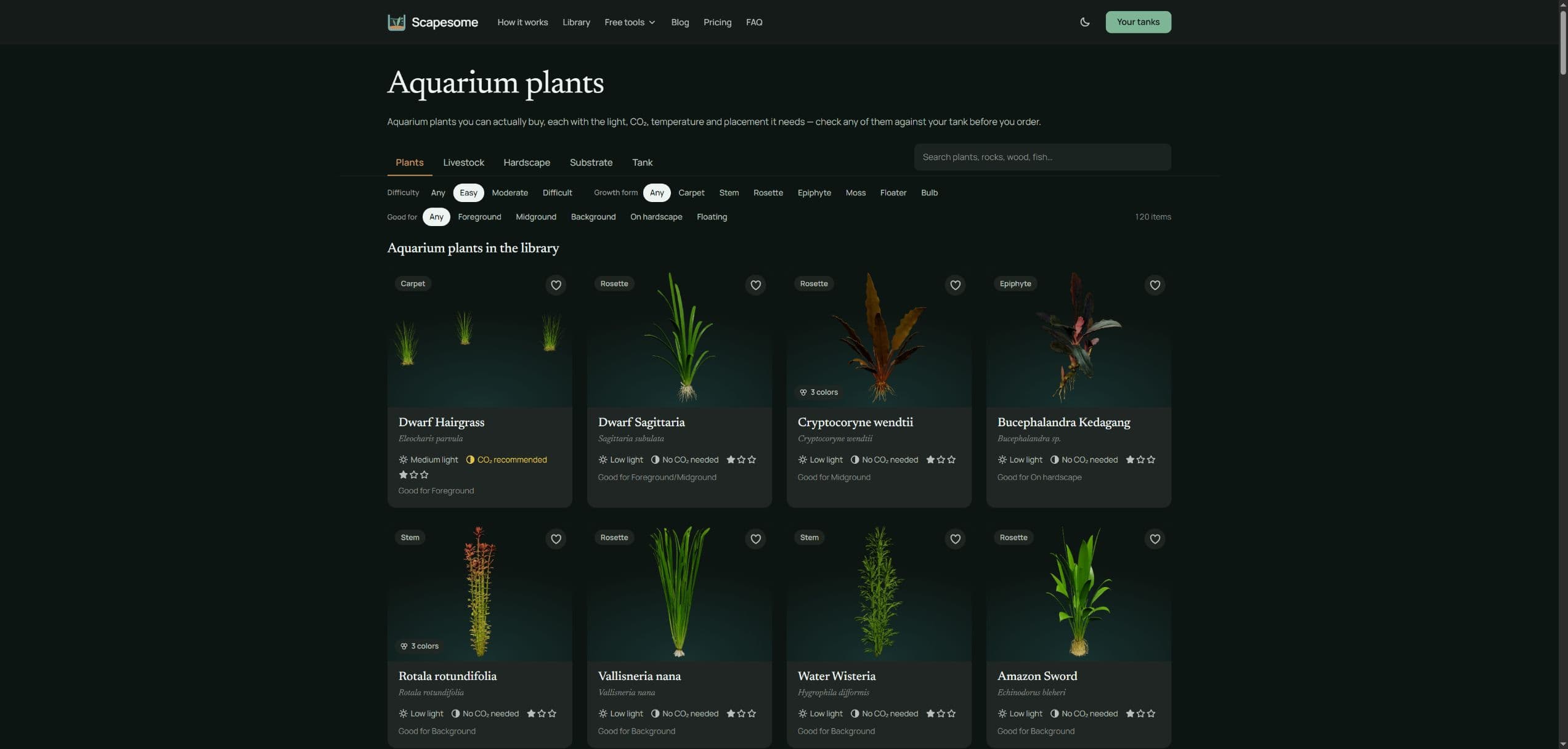
Tissue culture vs potted aquarium plants: which should you buy?
Choose cups or pots by the actual plant material, planting positions and preparation involved, rather than comparing container counts.

Floating aquarium plants: how much surface should you cover?
Decide where shade belongs and keep the required surface areas open before adding a patch of floating plants.
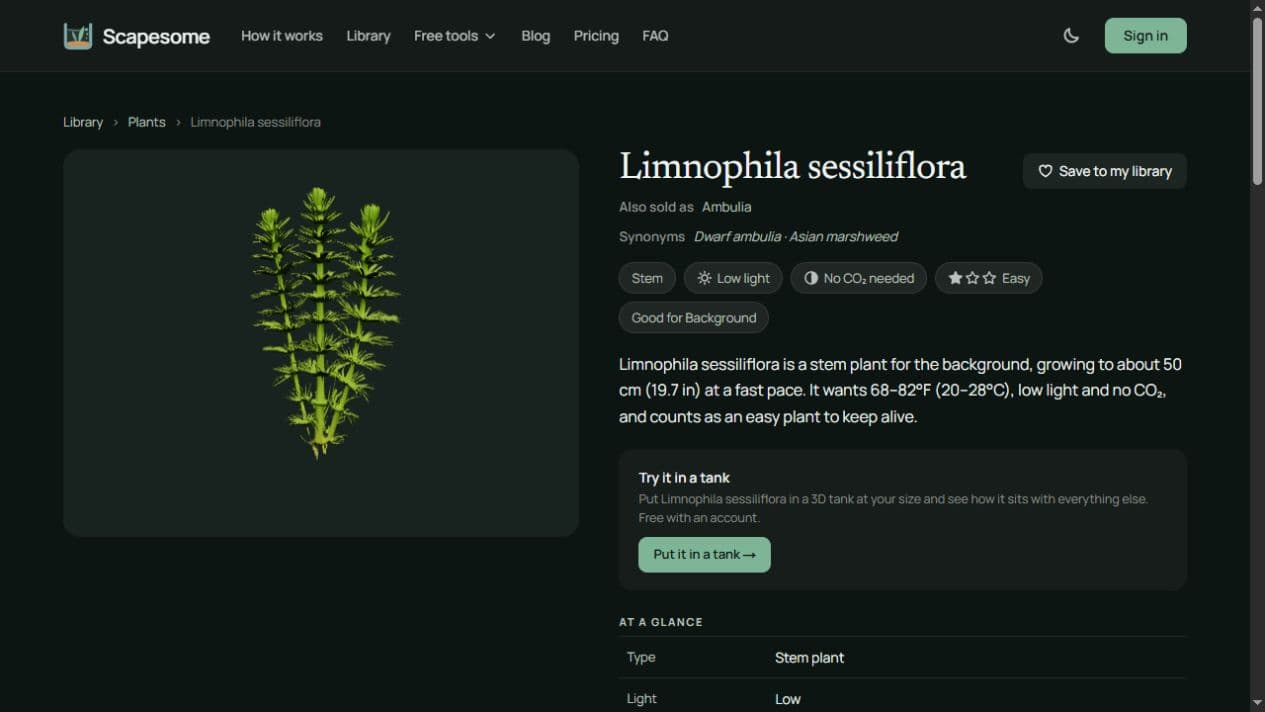
Which background aquarium plants will fit your tank?
Measure the space above the rear bed, compare plant forms and leave room for the trimming your chosen background will need.