Seiryu stone vs dragon stone: which should you buy?
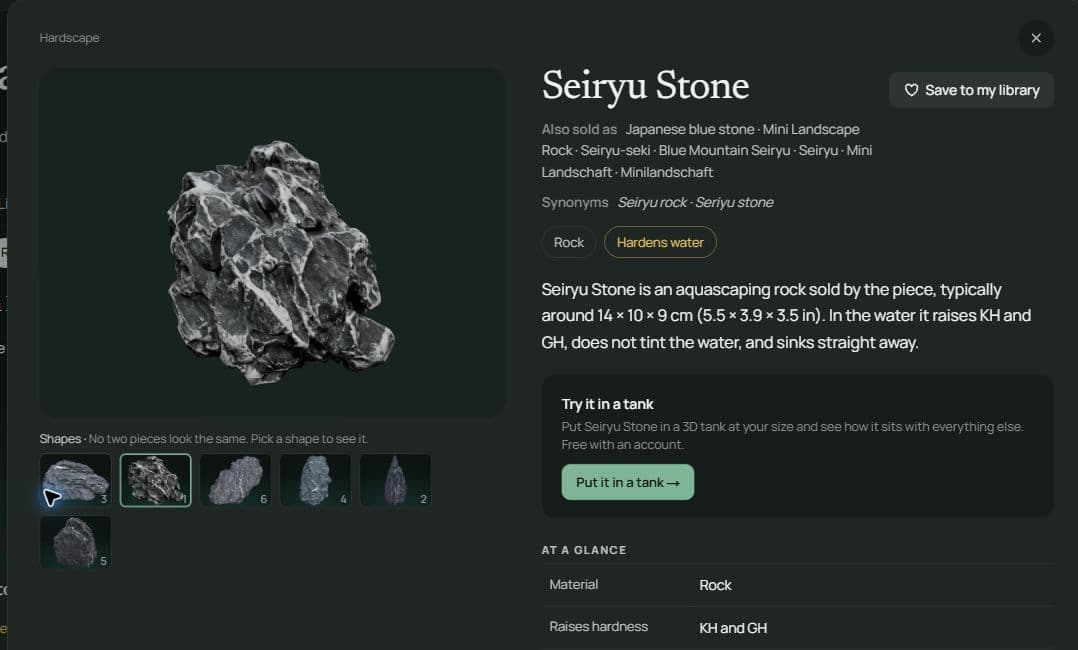
Scapesome's Seiryu entry, showing one existing model and its material notes. The model is a shape reference, not a test of the stone you will receive.
The two bags can lead to very different tanks. One suggests grey cliffs and pale seams; the other is full of warm, pitted surfaces. Picking the prettier photograph is easy. Working out whether that choice belongs in your water, and whether the actual pieces fit together, takes another look.
The difference that can change your shortlist
Seiryu can add minerals that raise carbonate hardness and general hardness. Dragon stone, also sold as Ohko stone, is commonly supplied as a water-neutral alternative. Those are useful starting descriptions, not a laboratory report for every bag sold under either name.
If keeping the water soft is an important part of the plan, dragon stone is the simpler candidate to investigate first. If you want Seiryu's appearance, establish whether its possible effect is compatible with the animals and plants you intend to keep. Do that before building a whole composition around it.
Neither choice comes with a dependable number for how much your own pH or hardness will change. Source water, the particular material, quantity and conditions all matter. A photograph cannot supply those missing details. Ask the seller what they are actually supplying and what they know about its water effects.
Compare the same things, not just the colors
Decision | Seiryu stone | Dragon stone / Ohko |
|---|---|---|
Water conditions | Allow for possible hardening; check against your target | Often chosen when avoiding hardening; verify the supplier's material |
Visual direction | Grey, angular forms and contrasting veins | Brown to reddish tones and pronounced pits |
Preparation to budget for | Rinsing and inspection of the individual pieces | Rinsing, with particular attention to clay trapped in holes |
What the name cannot tell you | Whether the particular pieces form a useful group | Whether the cavities and overall shape suit your planting and access |
The last row matters more than a tidy comparison makes it seem. Two stones from the same bin can give you a broad base or a thin upright slab. They belong to the same material category, but they solve different layout problems. Buy for the group you need, rather than assuming a matching label guarantees matching shapes.
Decide what one main rock has to do
Before choosing smaller pieces, write down the job of the largest one. Is it the high point at the back? A low boundary beside an open foreground? The base for a fern? That job gives you something more useful to shop for than a total weight alone.
For a narrow tank, an upright rock that looks excellent from the front may take up too much depth at its base. A slanted slab can require a wider footprint than its visible face suggests. Leave room to plant behind it and to reach the glass. If the only place for a cleaning tool is through the rock group, the arrangement needs another pass.
You can inspect existing shapes in the Seiryu stone entry and the dragon stone entry. Use those models to describe a shape or try a rough arrangement. They do not certify the dimensions, weight, balance or chemistry of a piece in a seller's bag.
Clean the pieces before judging the final fit
Rinse loose dust away before the rocks go into the aquarium. With dragon stone, look inside the pits as well as across the outer surface: clay can remain where a quick rinse does not reach. Work patiently around delicate-looking edges instead of treating every cavity as something to force open.
Clean pieces are easier to inspect and arrange. A recess packed with dirt may not offer the gap you expected. A surface that looked flat in the shop may rock on its base once you try it in the intended orientation. Preparation and fitting belong before planting, while you can still move everything freely.
Do not treat a brief rinse, a color match or one household test as a complete compatibility assessment. Where the livestock's requirements leave little margin, the actual material and water checks deserve more attention than the trade name.
Before you order
For a soft-water plan, start by asking about dragon stone and other suitable alternatives. For a grey, veined composition, ask whether Seiryu's water effects fit the plan before committing to it. If neither gives you the shape and conditions you need, choosing another material is a reasonable outcome.
Then check the proposed group from above as well as from the front. Keep the largest piece, its supporting shapes and the open area in the same sketch. The aquarium layout guide walks through that arrangement before rocks and plants are bought.
Ask for photographs and approximate dimensions of the actual pieces when possible. Keep alternatives on your shortlist until you know the group fits; a bag of the right material can still be the wrong set of shapes.
Related reading
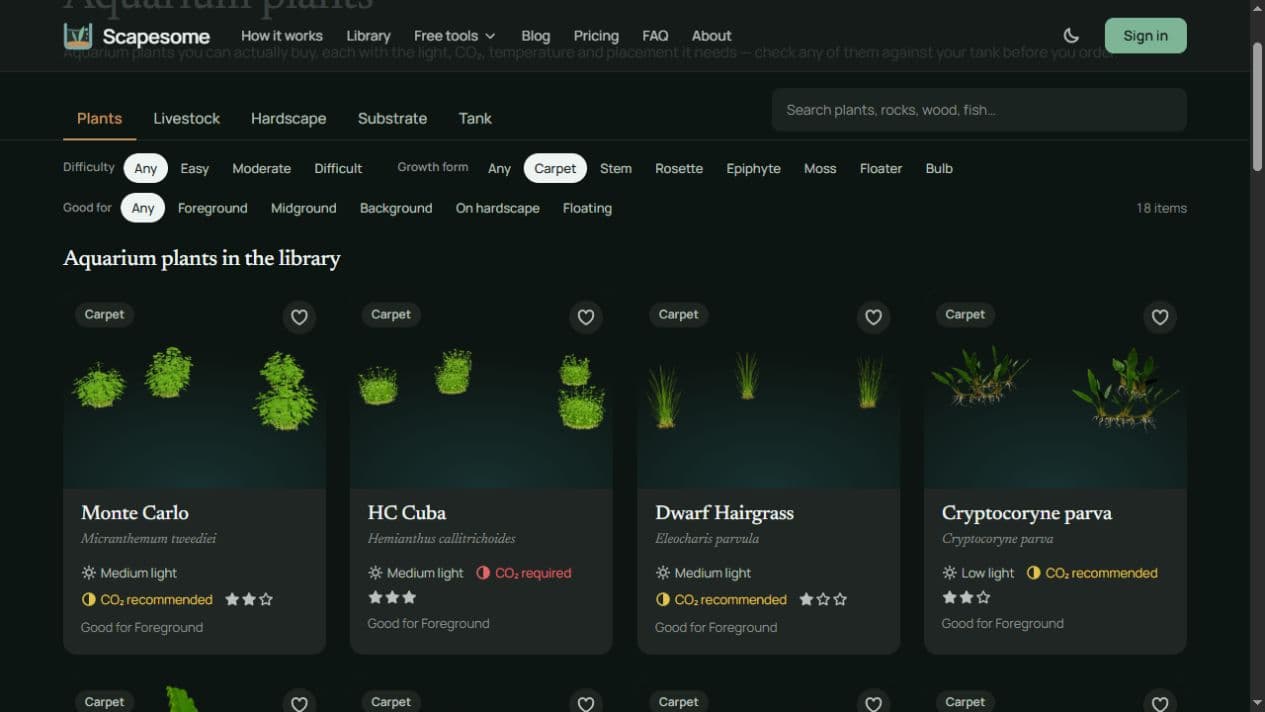
Carpet plants without CO2: which ones suit your tank?
Choose a foreground for a tank without CO2 injection: compare leaf shape, light, height and waiting time before you buy plants.
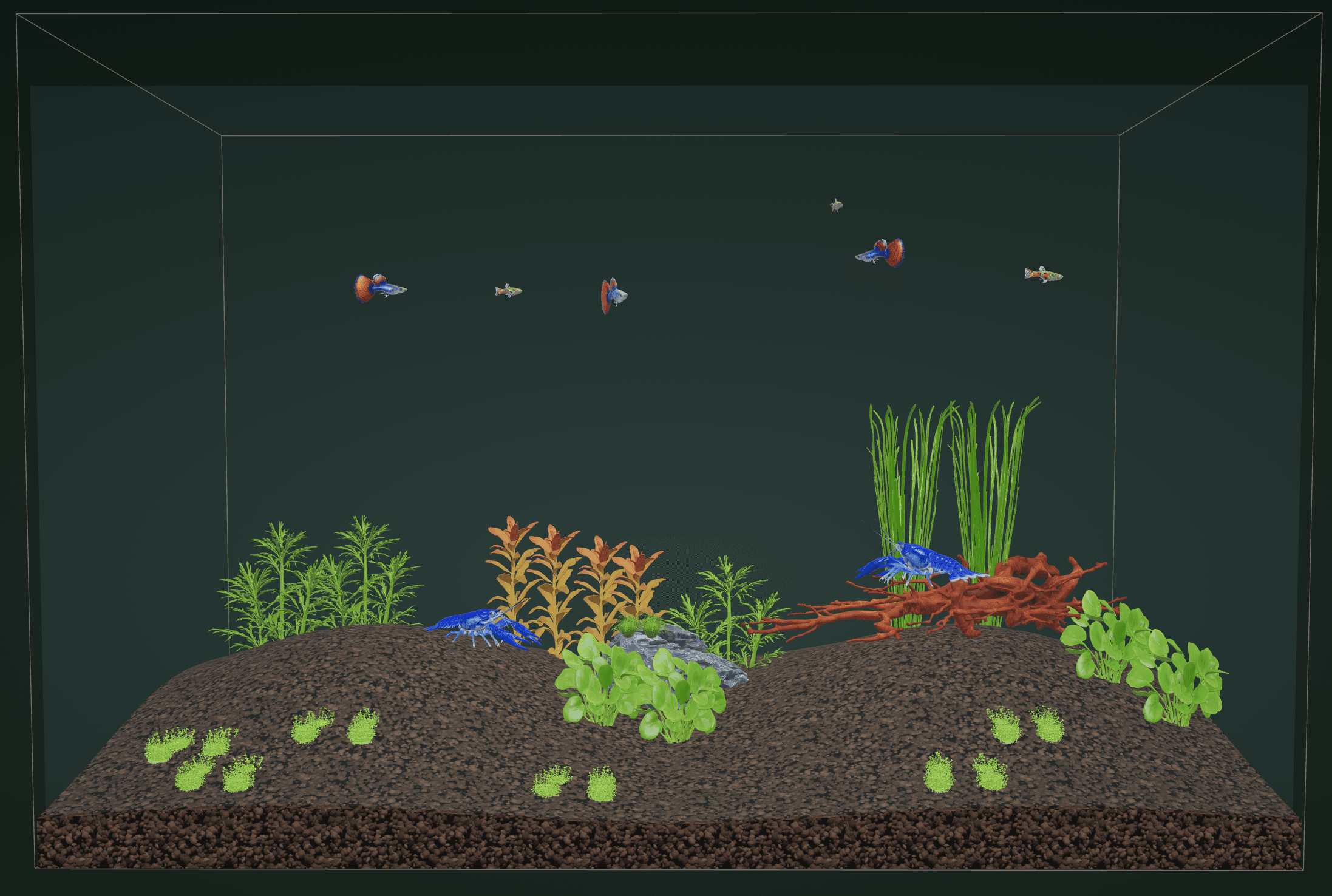
How to plan an aquarium layout before buying rocks and plants
Choose a layout that fits your tank, position the main rock or wood, and plan planting space before buying materials or gluing hardscape.
How to choose aquarium substrate depth and work out how much to buy
Choose depth for your material and planting zones, compare flat and sloped beds, and work out the liters and bags you need before buying substrate.