Can aquarium plants grow in sand? What to plant and how
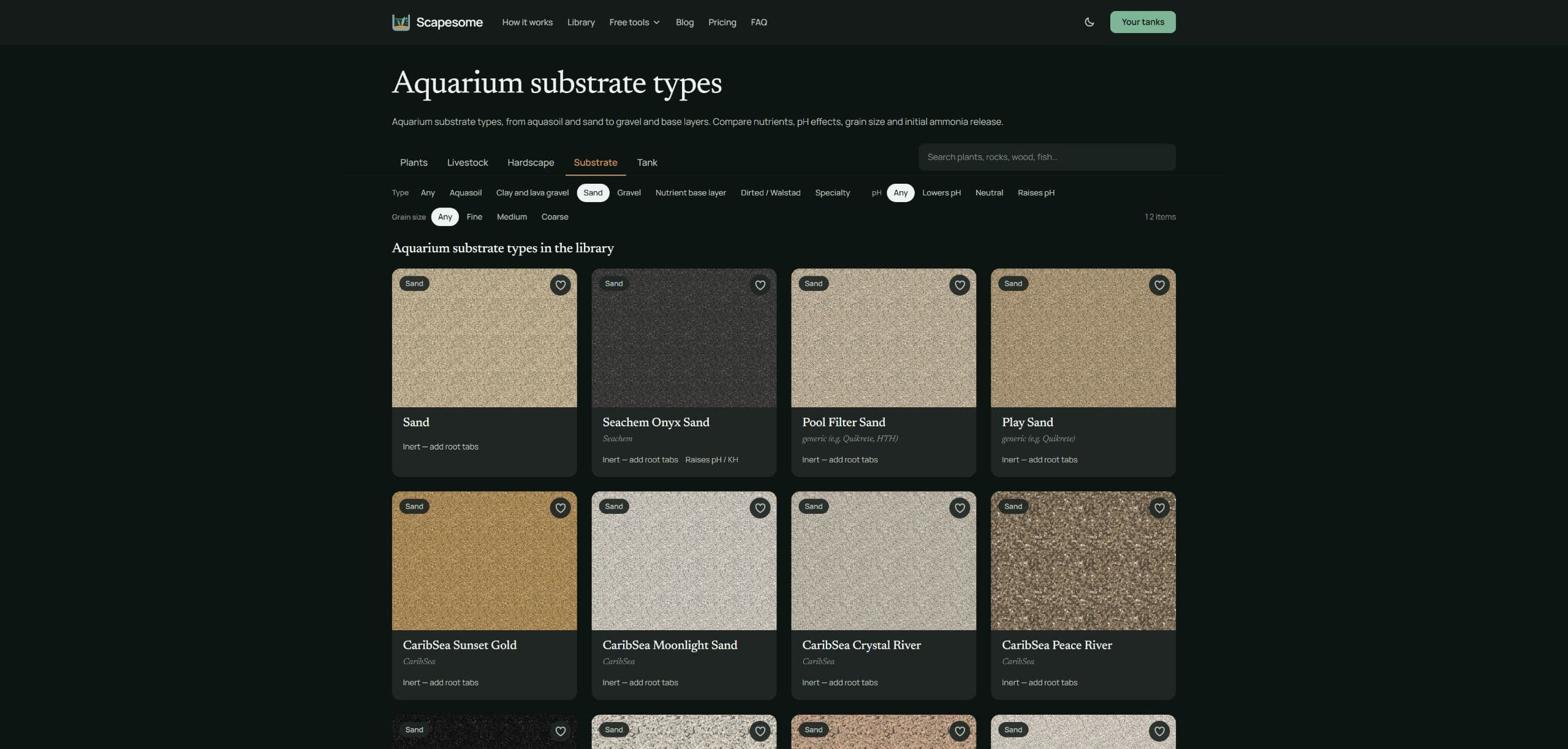
The sand materials in Scapesome’s substrate library. Check the exact product’s properties before planning rooted planting.
Yes, but the sand is only part of the decision. A rooted plant needs a suitable place to anchor and access to nutrients. A plant attached to wood, or floating at the surface, uses the tank very differently even when sand covers the floor.
Start by deciding which plants belong in sand and which belong elsewhere. Then plan nutrition and planting depth for the ones that will root in it. Buying a deeper bed does not by itself solve a nutrient shortage.
Establish what the sand actually contains
“Sand” describes a granular material, not a complete growing system. Check the product’s composition, grain information and effect on water chemistry. An inert aquarium sand and a mineral-rich material sold for a different type of aquarium can look similar while doing different jobs.
Use the substrate library to compare the material’s stated properties, then verify the exact product you are buying. Do not infer chemistry from its color or an attractive photograph.
For plain inert sand, plan an external nutrient source where the selected plants need it. A fertilizer placed near roots and a fertilizer added to the water are different delivery routes. Neither description tells you whether that product supplies every nutrient your setup needs; read its composition and directions.
Sort the plants by how you will place them
Planting approach | What to check |
|---|---|
Rooted rosettes, such as Cryptocoryne | Root space, crown position, nutrient supply and room for the eventual leaf spread |
Stems inserted into the bed | Species requirements, secure anchoring and space between planting positions |
Anubias or Java fern on hardscape | Exposed rhizome and a suitable attachment; sand does not need to feed a buried rhizome |
Floating plants | Surface conditions and shade cast below; the sand is not their rooting bed |
These are placement distinctions, not a promise that every member of a group suits your aquarium. Compare light, CO₂, temperature and eventual size on the individual plant entries.
You can build a planted aquarium with an open sand foreground and most plants on wood or rock. That is a different plan from covering the same floor with deeply rooted rosettes. Choose between them before calculating material quantities.
How to plant rooted plants in sand
Prepare potted material carefully, removing the pot and growing wool as appropriate. Separate usable plants without tearing every connected section into an artificial quota of pieces.
For a rooted rosette, place the roots into the bed while keeping the crown at the surface. The roots need anchoring; the point from which leaves emerge should not disappear into a mound. For a stem, follow the species’ planting guidance and hold it securely while releasing the tweezers.
If a plant repeatedly floats up, inspect the problem before piling more sand over it. The starting portion may be very small, the roots may not be seated, or filling may be disturbing the surface. Add water gently. A plant that is physically anchored still needs suitable conditions to establish.
Plan the feeding route rather than a universal dose
Some rooted plants benefit from nutrition placed near their roots. Follow the chosen aquarium fertilizer’s placement and replacement directions, keeping it in the intended zone. Other plants can use nutrients from the water. Avoid a strict “roots only” versus “leaves only” rule for all species.
A new aquarium’s needs also differ from those of a mature, stocked one. Do not assume waste will immediately provide a complete fertilizer, or add multiple products at full strength without checking their ingredients. The useful starting point is the actual plant list, substrate and product instructions.
Give each planting zone an appropriate bed
There is no single sand depth that answers every plant, tank and layout. Rooted areas and open decorative areas can have different requirements. Work out the intended profile with the substrate depth guide, then use the substrate calculator for a material estimate.
The calculator turns dimensions into volume. It does not decide whether roots will thrive, supply nutrients or account for a plant buried too deeply. Keep those biological and placement checks alongside the number.
Plants in sand are a workable choice when the material, planting method and nutrient plan fit together. If that plan still feels uncertain, begin by changing one decision: choose plants for the placement you can support, rather than buying an assortment and hoping the bed suits them all.
Related reading
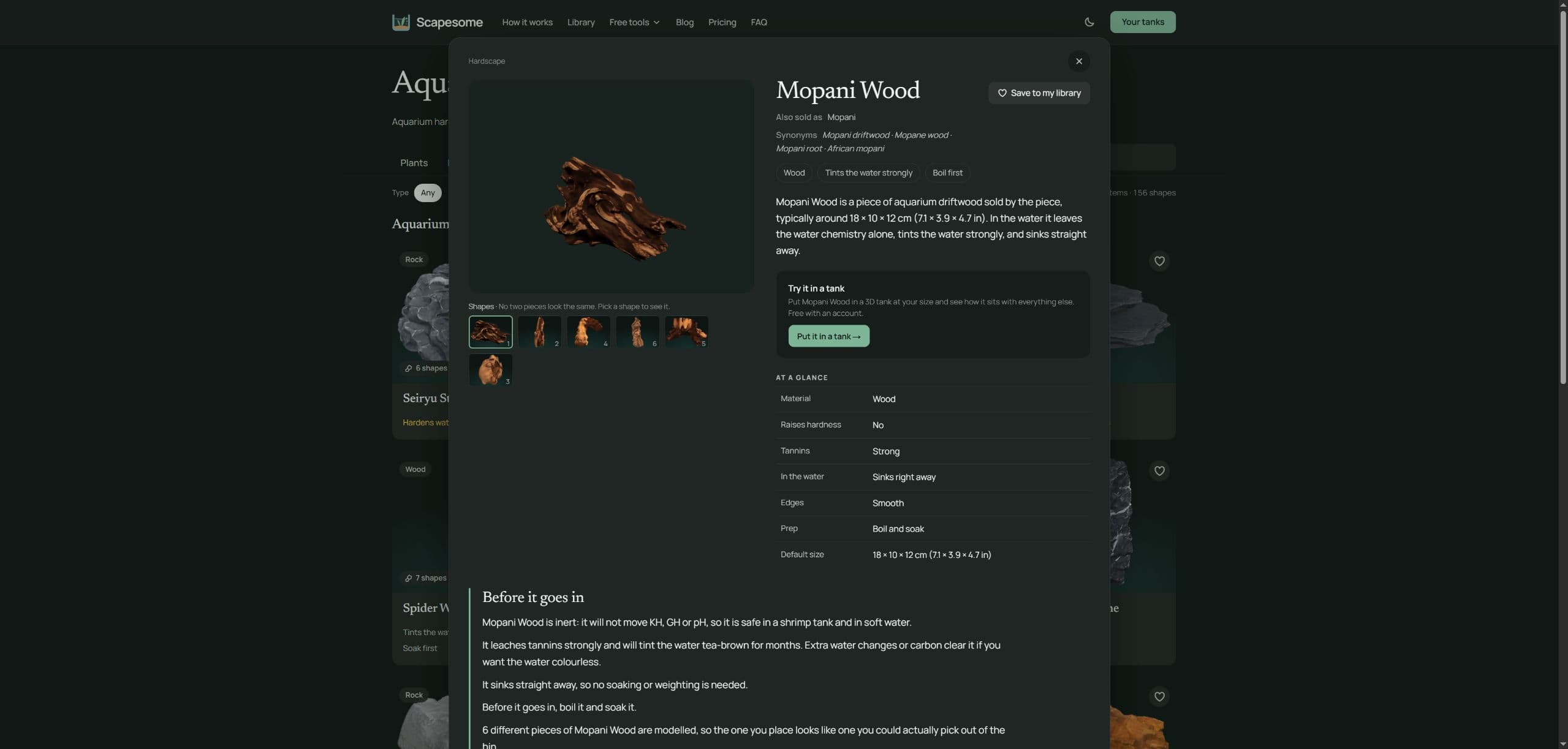
How to choose driftwood that fits your aquarium
Check all three dimensions of a wood piece, its intended orientation and the gaps you need before buying it.
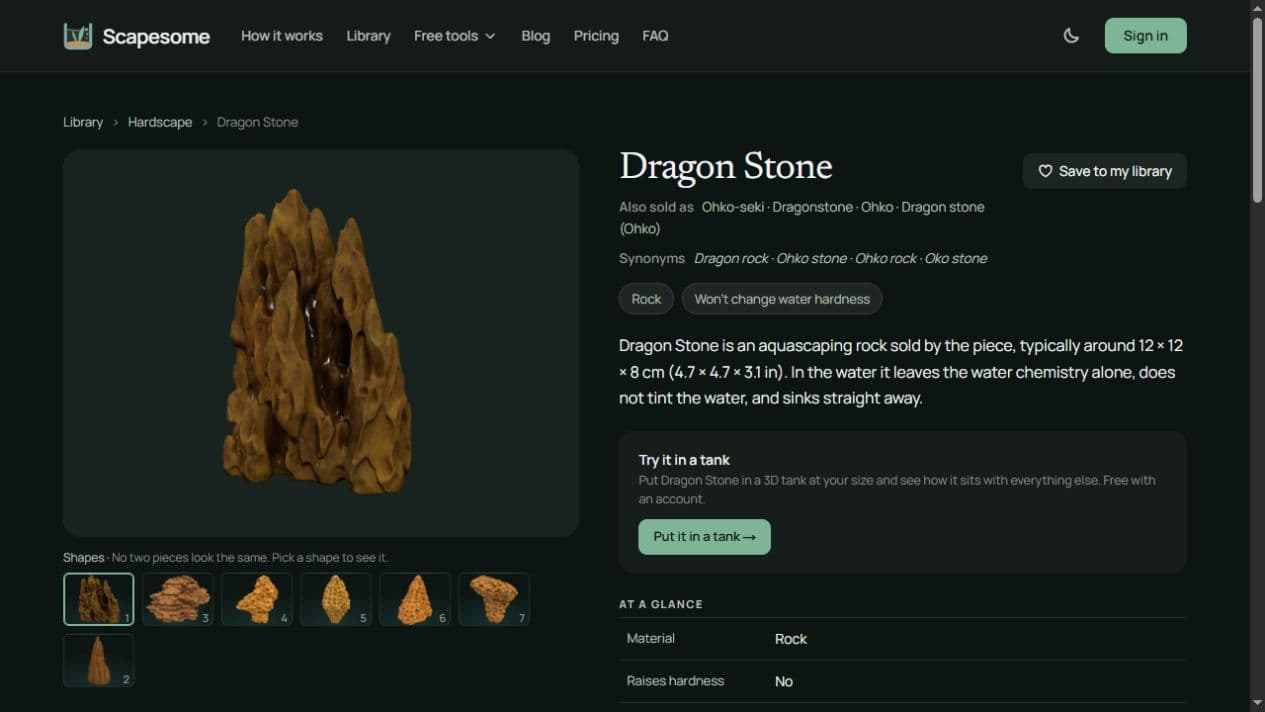
How to check aquarium hardscape before you glue it
Rehearse cleaning, planting and equipment removal before fixing the arrangement in place.
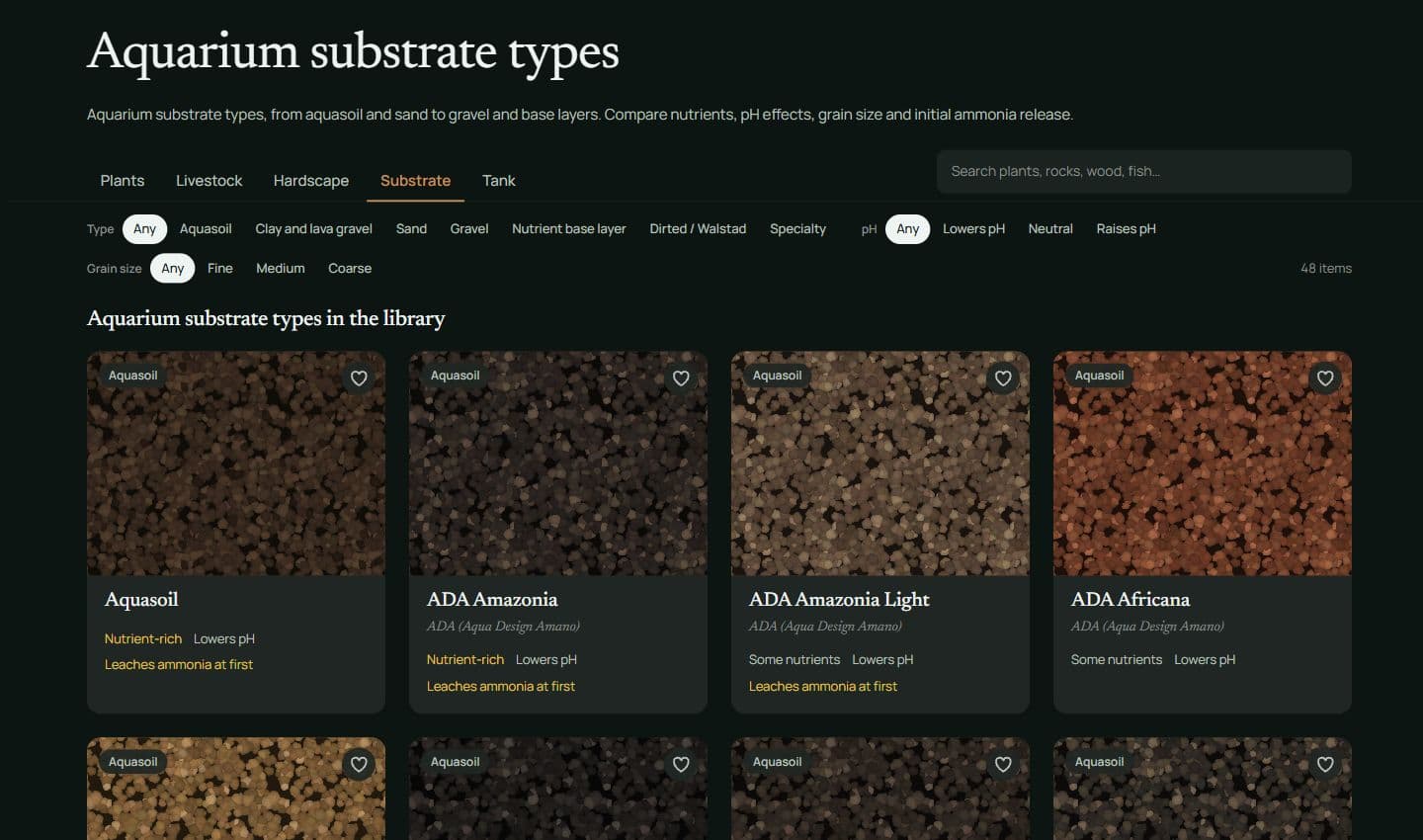
Aquasoil vs sand: which does your planted tank need?
Choose a bottom layer for the roots, water conditions and open areas in your plan. Learn when sand can work and what aquasoil needs you to check.