Tiger lotus care: plant the bulb and manage floating leaves
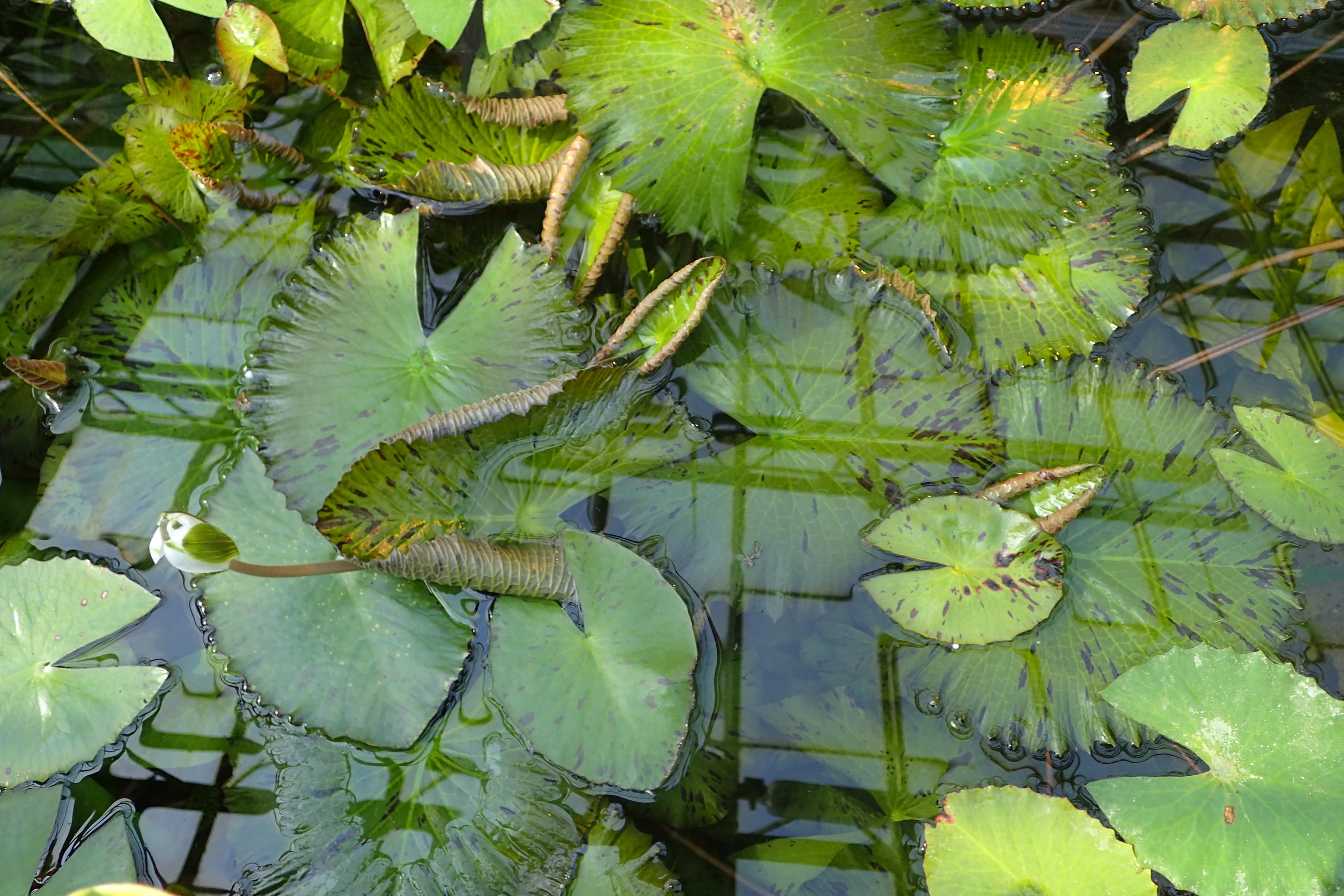
Floating leaves of Nymphaea zenkeri at the Kraków botanical garden. This garden photograph illustrates surface growth, not aquarium size or a promised red color. Photo: Krzysztof Ziarnek, Kenraiz, CC BY-SA 4.0; unaltered.

A tiger lotus can produce two very different outlines in an aquarium: broad leaves held underwater near the bulb, and long-stalked leaves that reach the surface. Decide which appearance you want before giving it the middle of a crowded planting.
The plant sold as tiger lotus is often labelled Nymphaea zenkeri or Nymphaea lotus. It is a water lily, despite the common name. Check the seller's identity and planting directions rather than applying advice for any aquarium bulb that looks similar.
Leave the shoots above the substrate
Remove the pot and packing material carefully, then inspect the bulb and any existing shoots. Set it into the bed shallowly with the growing points exposed. Do not bury the entire bulb to stop it moving.
For its tiger lotus bulbs, Aquarium Co-Op advises pushing roughly one-third of the bulb into the substrate. Treat that as guidance for the supplied bulb, while checking its orientation and the producer's instructions. Leaves and shoots need to remain above the bed.
If the bulb initially floats, avoid pinning it down with a heavy rock. Give it a suitable place to settle as it becomes waterlogged and roots establish. Check that it cannot drift into an intake or damage other planting while loose.
Reserve room for the eventual leaf spread. A lone bulb occupies very little floor space; that says little about the canopy it can develop.
Choose between submerged foliage and surface leaves
Floating leaves are normal growth, not evidence that you planted the bulb incorrectly. If you enjoy a water-lily look, leave room for some at the top and assess what they shade below. If your aim is an underwater accent, remove unwanted surface-bound leaves near the base of their stalks, taking care around the bulb and new shoots.
Repeated selective pruning can help maintain the submerged presentation, but it is ongoing care. It does not guarantee that the plant will never send up another long stalk. If you dislike that task, a different accent plant may suit the tank better.
Do not strip a healthy plant of all its foliage just to make the silhouette match a photograph. Remove a few selected leaves as needed, collect them, and reassess the remaining growth. Large, sudden changes can leave both the plant and the layout looking very different.
Check the shadow before changing the light
Broad floating leaves can shade a much larger area than their stems suggest. Look down from above, then inspect the shorter plants beneath. A low group disappearing under the canopy may need more open space overhead rather than more hours from the lamp.
Keep a usable surface opening for feeding and for any fish that need air access. The surface-coverage guide explains the checks without prescribing one percentage for every aquarium.
This matters when choosing neighbors too. Leave space where an expanding leaf can be removed without dragging scissors through a dense stem group. A prominent specimen still needs a maintenance route.
Support growth without chasing a color chart
A nutritious substrate and appropriate aquarium fertilization support the plant. Follow the fertilizer's own directions and consider what the bed already provides before adding root products. Do not copy a dose from a tank with different water volume and substrate.
Light guidance varies with the goal and the plant supplied. A tiger lotus may grow under modest lighting, while stronger coloration and a particular compact appearance can demand different conditions. Green, reddish and patterned leaves occur; the library image is not a promise of the color yours will achieve.
If your main aim is a colored accent without CO₂ injection, compare the broader choices in our red-plant guide. Choose a plant whose size and care you want as well as its color.
When older leaves fade
Some existing leaves may be damaged in shipping or lost after planting. Remove decaying material, watch the growing points and check the condition of the bulb rather than repeatedly digging it up for inspection.
Do not write off every decline as a normal rest period. A soft or deteriorating bulb, continued loss without recovery, and changes in water quality deserve attention. Review planting depth and conditions before buying a stronger light or more fertilizer.
A tiger lotus is easiest to plan around when you have already decided how much of the tank you are happy to share with its leaves. That decision makes the next long stalk a manageable choice.
Related reading
Subwassertang care: place a clump you can keep tidy
Keep a soft Subwassertang patch in a position you can inspect, clean and contain as it grows.

Amazon sword plant care: give the roots and leaves room
Check the adult footprint, plant the crown correctly and keep a large sword from shading the rest of your tank.
How long should aquarium lights stay on for plants?
Set a useful starting photoperiod and learn what to inspect before adding hours to your aquarium light.