Subwassertang care: place a clump you can keep tidy
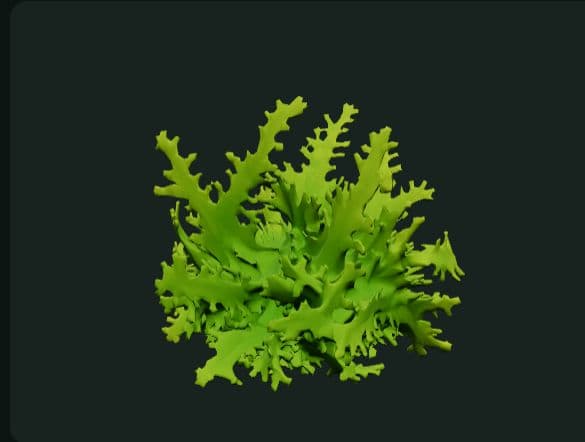
Scapesome’s existing Subwassertang appearance model, shown as a planning illustration. It is not an identification photograph or an example of an established clump.
Subwassertang arrives as a loose, green tangle rather than a neat pot of stems. It can be a useful choice when you want a soft patch around hardscape without digging a new planting bed. The first decision is where that loose material will stay when the filter is running.
Despite its moss-like use in aquariums, it is a fern gametophyte, commonly sold as Lomariopsis cf. lineata. Its broad, branching green tissue is different from the fine leafy shoots of Java moss. Shop names also include Süsswassertang and Suesswassertang; do not assume a product labelled “Pellia” is the same plant.
Subwassertang care starts with placement
Low to moderate light and no CO₂ injection can suit Subwassertang. It does not require aquasoil or planting like a rooted rosette. Choose a visible, accessible position and check the actual temperature and care guidance for the supplied plant.
A small hollow between stable pieces of hardscape can help contain a loose clump. A patch on a removable piece is another useful option. Neither arrangement should put it against a filter intake or hide the only route into a cave.
Start with enough space to see what happens around the edges. A thick mass tucked behind everything may be easy to install but difficult to inspect, clean or retrieve later. An exposed patch gives you a much better chance of noticing when debris collects or pieces drift away.
Keep the fastening gentle
You can leave a clump loose in a sheltered position, or loosely secure a thin layer to suitable rock or wood. A few gentle turns of aquarium-safe thread can hold the material while you watch how it settles. Do not compress it into a tight ball or bury it in the bed.
Check the fastening itself: no loose loops for livestock to enter, no sharp ends and no unstable stone placed on top as a shortcut. Turn the filter back to its normal operating setting and watch the patch. If it escapes immediately, reconsider the position or restraint.
This is not a rooted plant waiting for you to cover a crown. Nor does it need the rhizome treatment used for Anubias. If an instruction seems to describe one of those plants instead, verify it before following it.
Make cleanup part of the position
Loose green growth can catch waste and bits of food. During routine maintenance, inspect the clump and carefully draw away trapped debris without sucking the whole portion into the siphon. Check for small animals before removing or handling it.
If the patch becomes too bulky, lift out or separate a little material with care, collecting fragments as you go. Keep the remaining part open enough to inspect. You do not need to cut a precise hedge to keep it useful.
For a tidy layout, think through where separated pieces could lodge. A patch next to a dense carpet is harder to retrieve from than one beside open sand. That practical difference matters more than whether the original clump sits at the exact center of a composition.
Be patient without ignoring deterioration
Subwassertang can take time to establish. Leave a suitable position steady and compare dated photographs instead of moving it every few days to chase faster growth. Routine nutrients should suit the aquarium as a whole; a loose plant still needs access to nutrition even though it has no planting bed.
Remove clearly deteriorating material and review the conditions if decline continues. A short care label cannot diagnose the cause. Check shading, debris, temperature, water quality and recent changes before adding treatments or turning the light up sharply.
Choose it for the patch you want
Subwassertang suits a soft clump you are willing to contain and inspect. If you want fine branching shoots, a particular moss may offer a different texture. If you want a fixed row of upright leaves, choose a different growth form altogether.
Our guide to attaching aquarium moss covers that separate planting job. For the wider arrangement, use the aquarium layout guide to reserve access around the patch. A plant that is easy to grow is much easier to enjoy when you can still reach it.
Related reading

Amazon sword plant care: give the roots and leaves room
Check the adult footprint, plant the crown correctly and keep a large sword from shading the rest of your tank.
How long should aquarium lights stay on for plants?
Set a useful starting photoperiod and learn what to inspect before adding hours to your aquarium light.
Best aquarium plants for beginners: pick by your setup
A short, practical plant shortlist for the positions and conditions in your first planted aquarium.